

Wardha: Bombay HC doubles compensation for perennially irrigated land
Bombay High Court rules the Chichte family's acquired land in Wardha was perennially irrigated, ordering double compensation.
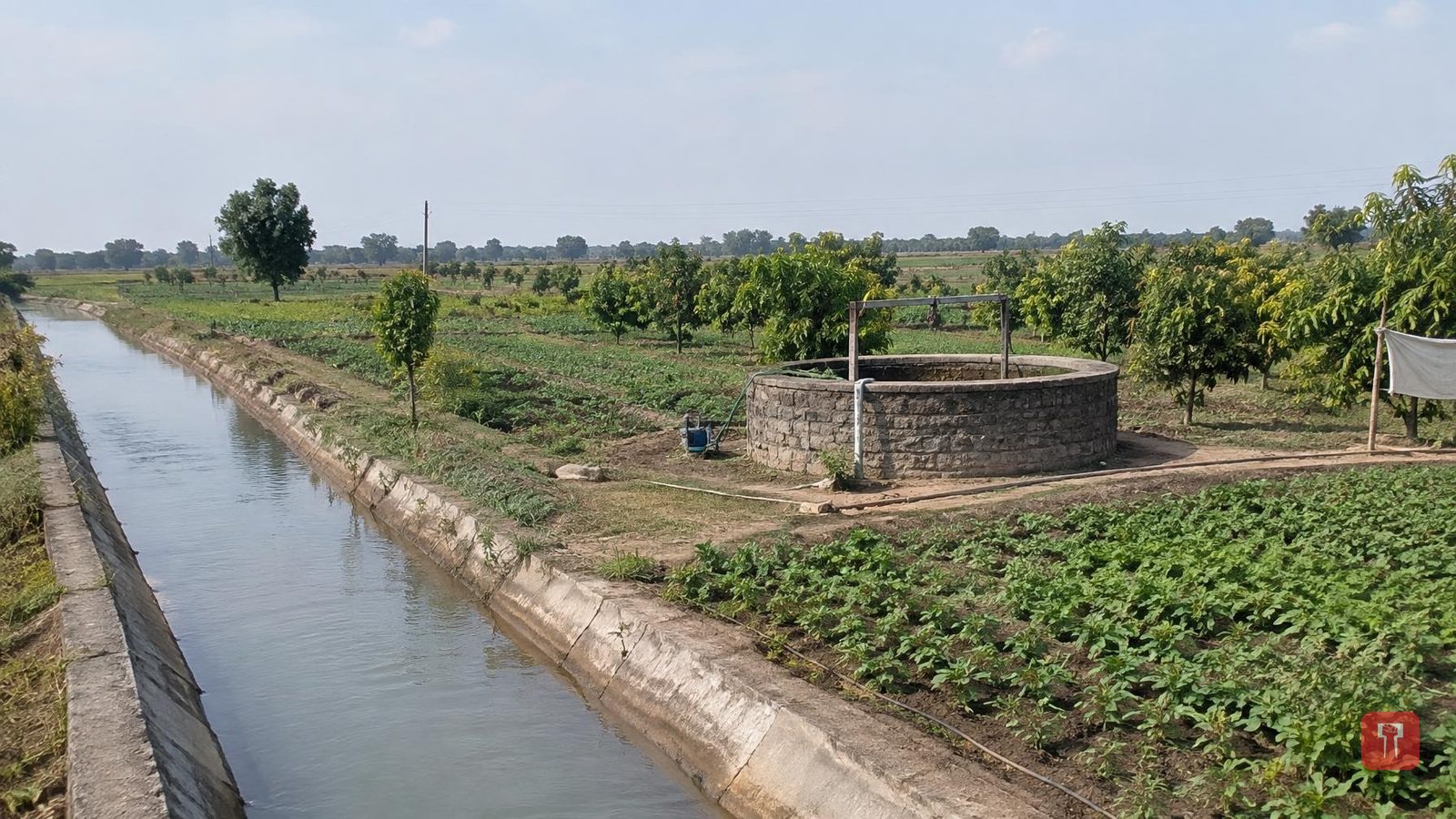
If a field has a proper well, an orchard, and the facility to take a crop all year round, it is not right to treat that land as merely barren and pay lower compensation. The Bombay High Court has made clear that when such solid evidence is found, the land will be treated as perennially irrigated, and under the rules, compensation must be paid at double the rate applicable to dry land.
The ruling has brought major relief to the Chichte family of Kolona village in Deoli tehsil of Wardha district. The court has fixed total compensation of Rs 5.04 lakh for their acquired land. The family had already received Rs 2.46 lakh; after deducting that amount, the court has ordered an additional Rs 1.68 lakh in compensation. It has also directed that whatever statutory benefits apply under the law be paid as well.
The case concerns Mauza Kolona in Deoli tehsil of Wardha district. The Chichte family owned a total of 3.90 hectares of agricultural land under survey number 175. Of this, 0.58 hectares was acquired on 25 November 2010 to build the Kolona canal under the Lower Wardha project. At the time, the Land Acquisition Officer had sanctioned compensation of only Rs 89,900 for this land.
The farming family felt this amount was too low. Citing the actual condition of the land and the irrigation facilities present on it, they sought higher compensation and approached the reference court set up within the Wardha civil court. The reference court partially accepted the farmers' claim and raised the compensation to Rs 2.46 lakh, but the Chichte family was still not satisfied, and the matter proceeded further.
After examining the evidence and applicable rules in the case, the Bombay High Court said it was wrong to fix compensation solely on the basis of dry land while ignoring the land's actual irrigation capacity. According to the court, the yield and economic value from farming on perennially irrigated land is higher than from dry land, and therefore, as per the rules, such land should be compensated at double the rate applicable to dry land. On this basis, the court has ruled in favour of the Chichte family.
