

Lalbaugcha Raja's leftover offerings to power BMC hospitals under new scheme
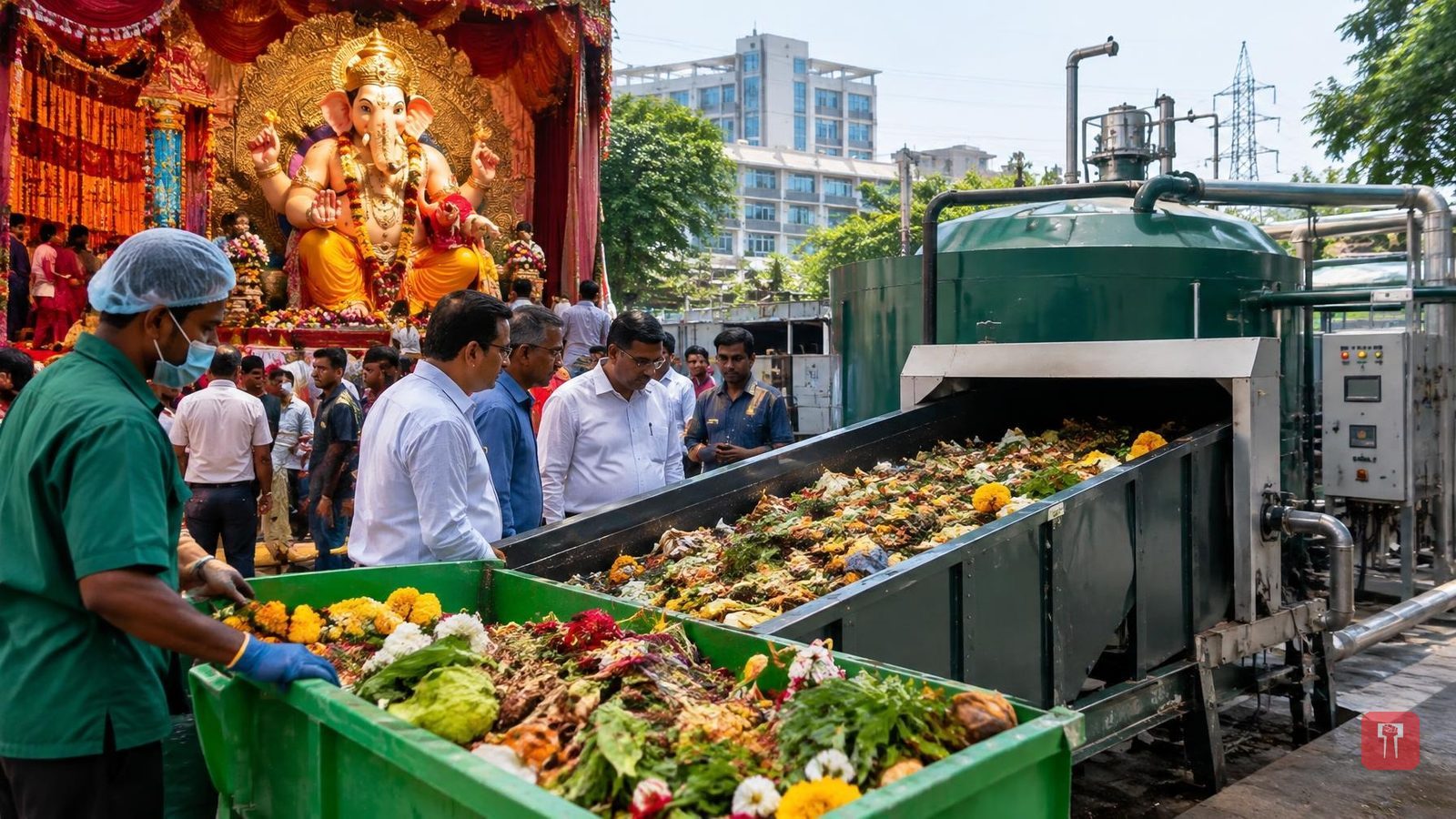
BMC and Lalbaugcha Raja mandal will convert organic waste from the pandal into energy to light up four civic hospitals.
 Images are not validated/verified
To properly manage waste generated during Ganeshotsav and put it to good use, the BMC and the Lalbaugcha Raja Sarvajanik Ganeshotsav Mandal have joined hands. Under the new scheme, food offerings and organic waste will be processed to generate energy, which will then be used to supply electricity to hospitals. In other words, waste from the offerings and flowers presented to Ganpati Bappa will not simply be discarded, but will be run through a set process to generate power. The project has been named "Prasad to Power".
About 8 to 10 tonnes of waste is expected to be generated daily from the temple premises during Ganeshotsav. Instead of the old method of dumping or discarding this wet waste, it will be collected daily using special vehicles. The collected waste will then be taken to the biomethanation projects set up at BMC's Nair Hospital, Kasturba Hospital, GTB Hospital and Sion Hospital, where it will be processed to generate energy.
According to the information available, the project has a processing capacity of 2 metric tonnes at a time. Under this, a total of 80 metric tonnes of organic waste will be processed over 11 days, with a target of generating an estimated 7,744 units of energy. How successful the project turns out to be will only become clear in the coming days. The energy generated from the waste will be used to light patient wards, corridors and public areas of the hospitals, helping meet part of the hospitals' electricity costs. The BMC has appointed the agency M/s Aerocare Aviation Pvt. Ltd. to run and maintain the project.
The project offers an example of how organic waste generated during large public Ganeshotsav celebrations can be put to useful purpose. Through "Prasad to Power", waste generated at the Ganesh pandal will be used for hospital resources. This initiative, linking devotional offerings with environmental care, could serve as a good model for waste management going forward, and if successful, could be adopted by other larger Ganeshotsav mandals as well.
