

Police order on loud DJ music splits BJP leaders in Nagpur
A Nagpur police order limiting loud DJ music has triggered a public disagreement between two senior BJP leaders, Sandeep Joshi and Praveen Datke
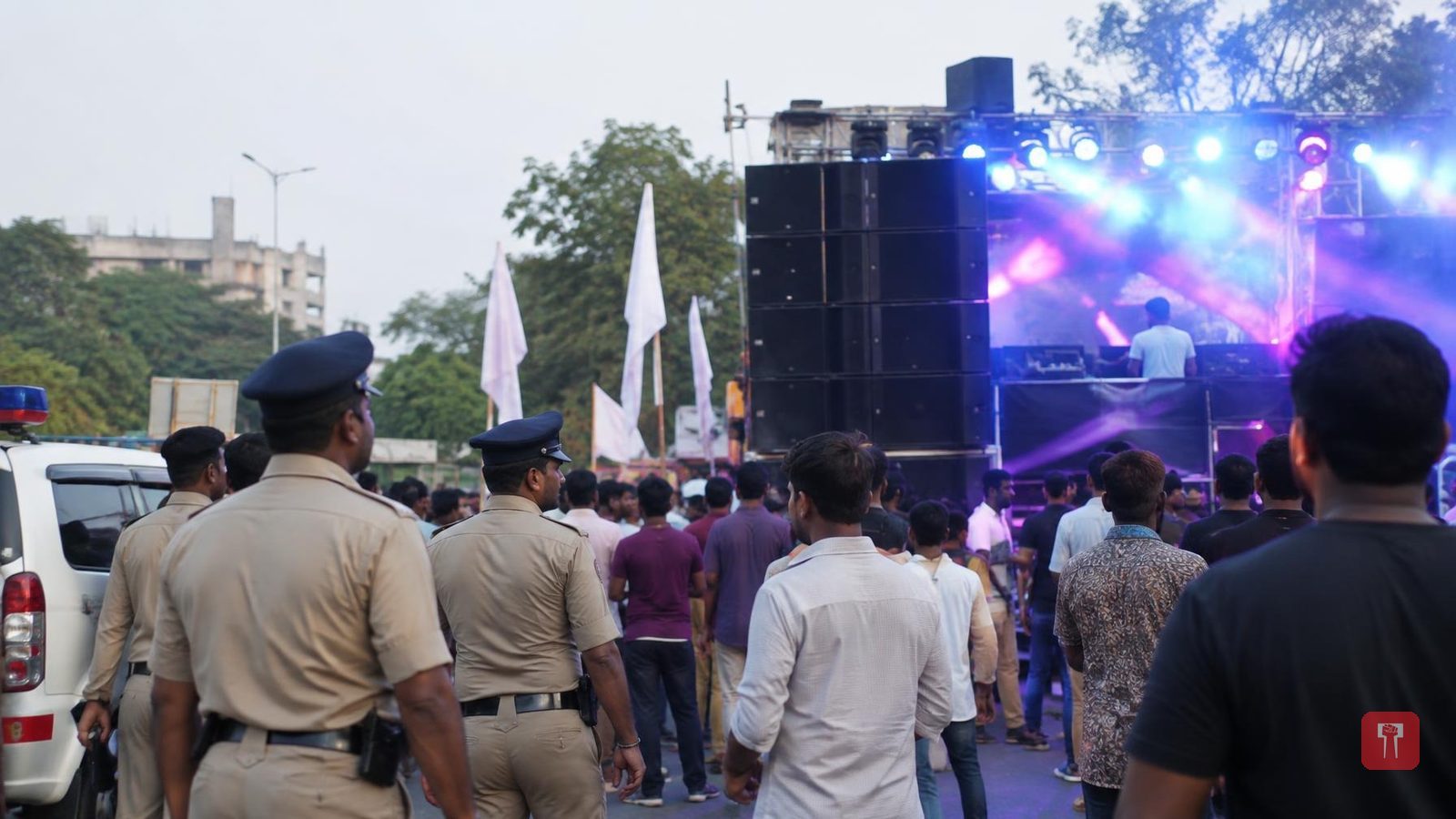 Images are not validated/verified
An order by Nagpur's police commissioner restricting loud DJ music has sparked a fresh political debate in the city. What is notable is that the disagreement is not with a rival party but between two senior BJP leaders, Sandeep Joshi and Praveen Datke, who have taken sharply different positions on the issue.
Praveen Datke, a BJP MLA, has not objected to the prescribed limit on DJ sound levels. His question is about when the restriction is being imposed and whether it is being applied equally to everyone. Datke says that if loud sound causes noise pollution, the rule should apply equally to festivals of every religion and to every kind of event, whatever it may be.
He specifically questioned why circulars on DJs are issued only ahead of Hindu festivals. Datke argues that instead of taking action based on a particular festival or religion, the administration should have a uniform policy through the year. He has demanded that the order be reconsidered and withdrawn.
Sandeep Joshi, on the other hand, says that for him the issue is not about religion but about health. Joshi says clearly that his campaign is not against any religion, festival or political party. His real concern, he says, is for the elderly, patients, pregnant women and young children, who can be affected by loud sound and laser lights.
According to Joshi, loud sound can cause problems for vulnerable groups, and laser lights also pose health and safety risks. He says his opposition is not to any particular religious event but that he supports rules and restrictions that protect people's health and safety.
The statements of the two leaders show that their concerns are centred on different things. Datke is talking about equality and fairness in the rules, while Joshi places health and safety above all else. Datke accepts that rules to prevent noise pollution are necessary, but says they should be applied uniformly across all religions and events. Joshi's argument is that people's health and safety should take priority over any religious or social event.
The dispute is no longer limited to whether DJ music should be allowed or restricted, but has become a question of what purpose the rules serve and how they should be enforced. The Nagpur case is now raising the larger question of whether noise pollution rules should apply only during festivals or whether there should be uniform standards for all events through the year.
Attention now turns to the administration's next move. Following these two differing views from within the BJP, it remains to be seen what kind of lasting policy the police and the government bring in to control sound, one that can accommodate both Datke's demand for equal treatment and Joshi's concern for health.
