

Delhi pollution lags weather changes by up to 51 hours, IITM Pune study finds
IITM Pune study of 2017-2025 data finds weather factors affect Delhi's PM2.5 levels with delays of up to 51 hours.
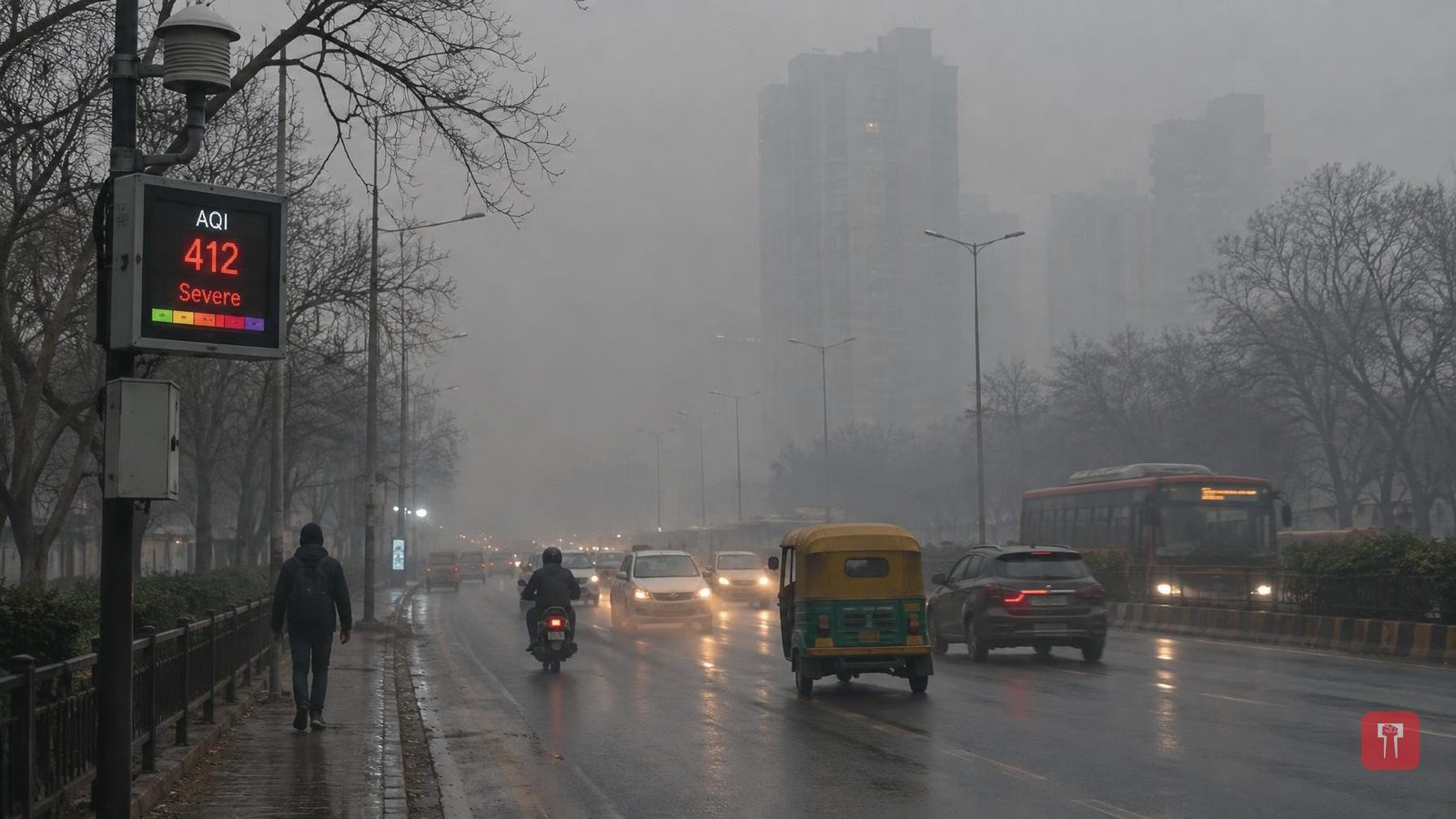
The poison in Delhi's air is not just from vehicle exhaust and factory emissions, weather plays a big role too. A new study by scientists at the Indian Institute of Tropical Meteorology (IITM), Pune has found this. Notably, changes in weather do not affect pollution levels immediately, some weather factors show their effect only after a delay of up to 51 hours.
The research has been published in the journal Environmental Science: Atmospheres. IITM's lead researcher Vivek Singh and his team analysed weather and PM2.5 pollution data for Delhi from 2017 to 2025. The study checked what relationship temperature, humidity, rainfall, wind speed, solar radiation intensity, surface pressure and the height of the atmosphere's lowest layer, the boundary layer, have with PM2.5 levels.
According to the study, the effect of changes in temperature on PM2.5 can take up to 51 hours to show. The effect of humidity and wind speed also appears only a few hours later. The delay was found to be three hours for temperature, four hours for humidity, five hours for rainfall, and around 11 hours for wind speed.
In winter, the height of the boundary layer drops to less than 500 metres. This leaves pollutant particles without enough room to disperse into the upper atmosphere, they get trapped near the ground and PM2.5 levels rise sharply. Low wind also allows pollution to keep accumulating, while strong wind helps scatter pollutant particles.
The research also found that pollution in Delhi is highest between 6 am and 9 am, and between 8 pm and 11 pm. Between November and January, PM2.5 levels were found to be above 200 micrograms per cubic metre several times. During the study period, the level reached a maximum of 879.6 micrograms per cubic metre. During the monsoon, rain and wind bring the level down to below 50.
Between 2017 and 2025, Delhi's average PM2.5 level recorded a gradual but steady decline. The average was 127.7 in 2017, falling to 80 in 2025. This clearer understanding of the relationship between weather and pollution could help make forecasting and early-warning systems for pollution more accurate in the future.
