

Houthi fighters used AI to fake commander's voice, tried Claude for missile coding
Houthi rebels used AI to mimic a Yemeni army commander's voice to confuse troops, while a weapons group tried using Anthropic's Claude to write missile guidance code.
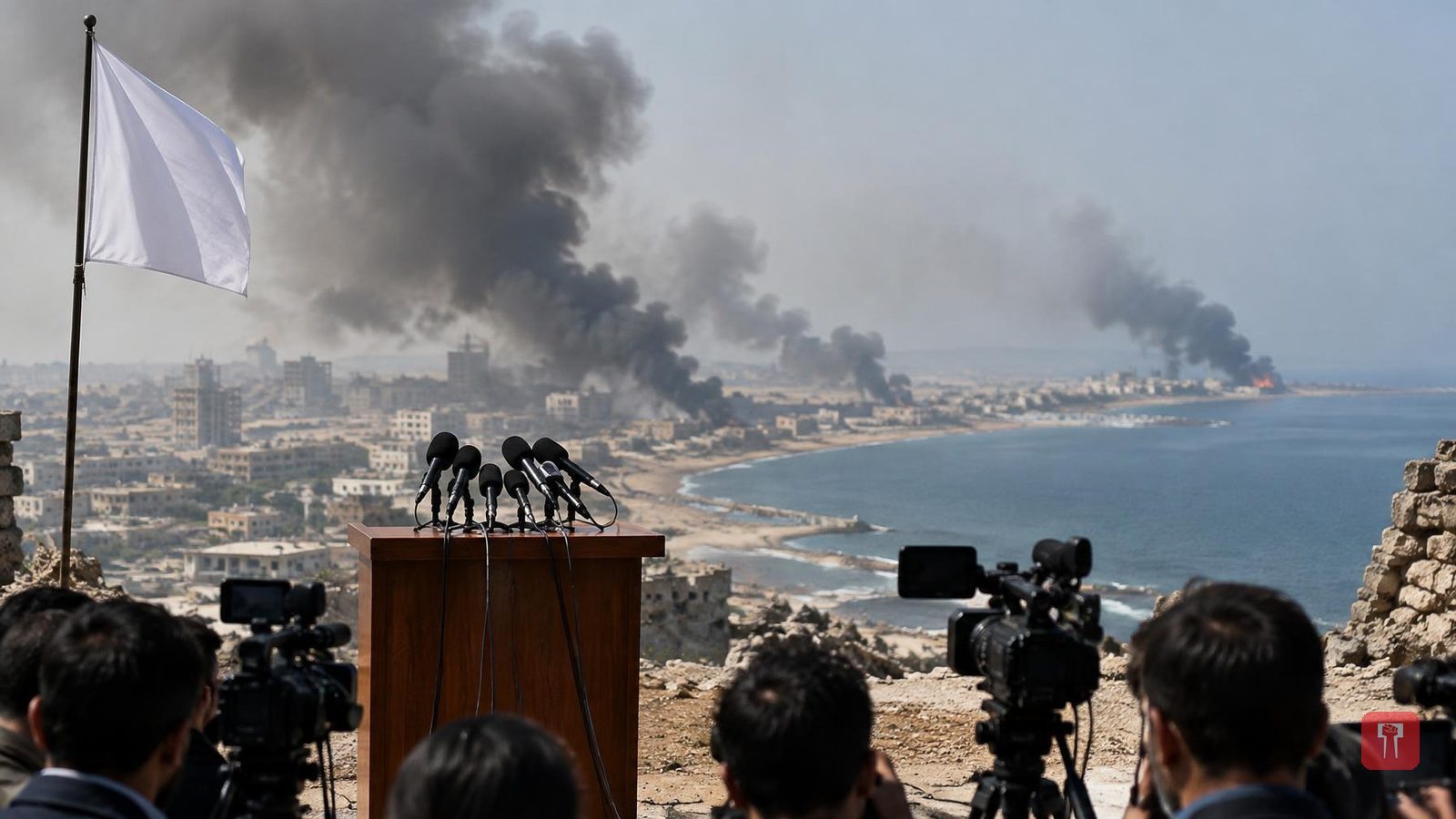 Images are not validated/verified
A dangerous case of artificial intelligence being used in the ongoing fighting in Yemen has come to light. Iran-backed Houthi rebels are accused of using advanced AI technology to mimic the voice of Lieutenant General Tariq Saleh, chief and senior commander of the Yemeni army's National Resistance Forces.
The fake audio message was circulated at a time when fierce fighting was underway between Houthi rebels and the Yemeni army over control of Mocha, a strategic city on the Red Sea coast. In the AI-generated clip, a voice identical to Saleh's told soldiers, "In war, sometimes you must retreat and sometimes advance; to save the force, all units must withdraw from Mocha city immediately." The fake message caused massive confusion among soldiers fighting on the front and was an attempt to break their morale.
After the audio message spread rapidly on social media and local messaging apps, the Yemeni army's media team quickly issued a clarification. The Al-Jumhuriya TV satellite channel, which broadcasts from Mocha city, exposed the incident, saying the Houthis had got the fake audio prepared using AI to mislead the public and break the army's morale.
Commander Tariq Saleh's media wing clarified that any official orders or statements linked to the army are issued only through authorised military media. Soldiers and civilians were urged not to trust any unauthorised or suspicious audio message. Along with this deepfake audio, the Houthis had also sent surrender messages to soldiers at midnight, offering an amnesty in exchange for laying down arms.
Besides the mimicking of the commander's voice, another serious report has emerged raising international concern over the military use of AI in Yemen. American AI company Anthropic, in a recently released 145-page security report, made a major disclosure. A weapons development group in northern Yemen had tried to use Anthropic's Claude Code AI model to develop software for missile and rocket guidance systems.
According to the report, a group of weapons engineers in a Houthi-controlled area assigned AI, in place of human software engineers, to write code for guided rockets, ballistic missiles with a range of more than 2,000 km, and hypersonic glide vehicles. AI was being used for navigation, position estimation and flight simulation.
Anthropic said its security systems had blocked several of these requests, but users tried to evade the security system by splitting the work across different sessions. After a test rocket flight failed, the Houthi engineers again turned to AI within a few hours to find out the reason for the failure. As soon as Anthropic found out, it blocked all accounts linked to the work and shared the threat information with security agencies worldwide.
The use of deepfake audio for psychological warfare and the use of AI for missile coding show that artificial intelligence is becoming a dangerous weapon on the modern battlefield. Following this, fresh discussion has begun globally on cybersecurity and control over military technology.
