

Where the school bell and the 9-to-5 workday actually came from
The daily routine of school, exams, a degree and then a 9-to-5 job is a fairly recent invention, shaped by industrial and social change over centuries.
Waking up early to go to school, sitting through classes, taking exams, earning a degree and then taking up a 9-to-5 job feels like a natural part of life today. But history tells a different story. Thousands of years ago, there were no fixed schools as we know them, and no set office hours either.
The routine that feels completely normal today is actually the result of social, economic and industrial change. The journey from the old gurukul system and hands-on craft learning to today's factories, rules, certificates and the fixed ladder of corporate jobs is an interesting one.
In earlier times, learning was not confined to four walls or a fixed curriculum. Children learnt from their families, community groups, temples, or a skilled teacher. Farming, animal husbandry, crafts and other trades were given greater importance. There were some centres that taught reading and writing, but only a few people got the chance to attend them. For everyone else, learning through experience and from elders was the real education.
Competitive exams for good jobs feel like a modern idea, but they actually began in ancient China. During the Sui dynasty, a special examination system was introduced to select capable people for government work. The Tang and Song dynasties later made this examination system more transparent and robust. The aim was to select officials on merit rather than hereditary privilege. Even so, social inequality meant only a few benefited, and the old examination system was finally abolished in 1905.
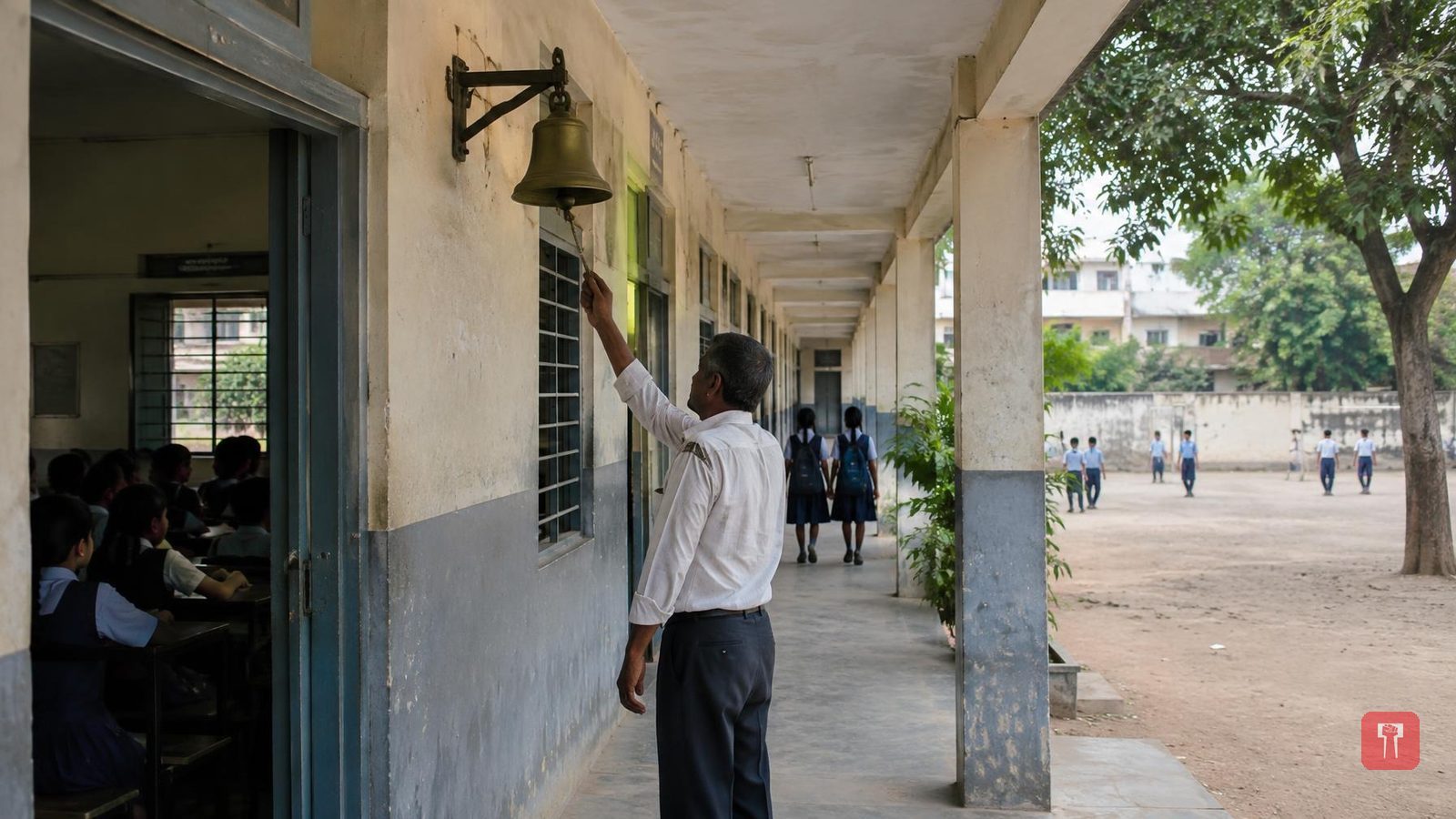
The Industrial Revolution of the 18th and 19th centuries brought about the biggest change in human history. Large factories and machines needed workers who could at least read, write, count and follow instructions. This need gave rise to the school system that taught children together and instilled discipline in them. States expanded public education to run their administration and economy. Regular classes, timetables, bells and exams were all shaped by the needs of the industrial era.
Before the Industrial Revolution, most people worked on a small scale on their own farms or at home, where time was not bound as strictly as it is today. But in the factory era, people were forced to go to a fixed place and work until a fixed hour. Workers initially had to toil for 12 to 16 hours a day, which badly affected their health and rights. Large labour movements followed, demanding fixed working hours. In 1919, the International Labour Organisation (ILO) adopted its first policy, recognising a norm of 8 hours a day and 48 hours a week, which became the foundation of today's 9-to-5 job.
Over time, the link between education and jobs grew even stronger. School provided basic education, college provided skills, and the degree at the end became the means to a job and an income. But none of this is a natural law; it is a social ladder built by people themselves. Now, in the age of technology and the internet, this old mould is changing once again. Companies are placing more importance on actual skills, experience and the ability to learn new things than on a degree certificate alone. At the same time, new practices such as work from home, part-time work and flexible schedules have begun to challenge the 9-to-5 framework.
