

President's Bodyguard: which three communities its horsemen come from
The President's Bodyguard, the Indian Army's oldest regiment, recruits only from the Jat, Sikh and Rajput communities
 Images are not validated/verified
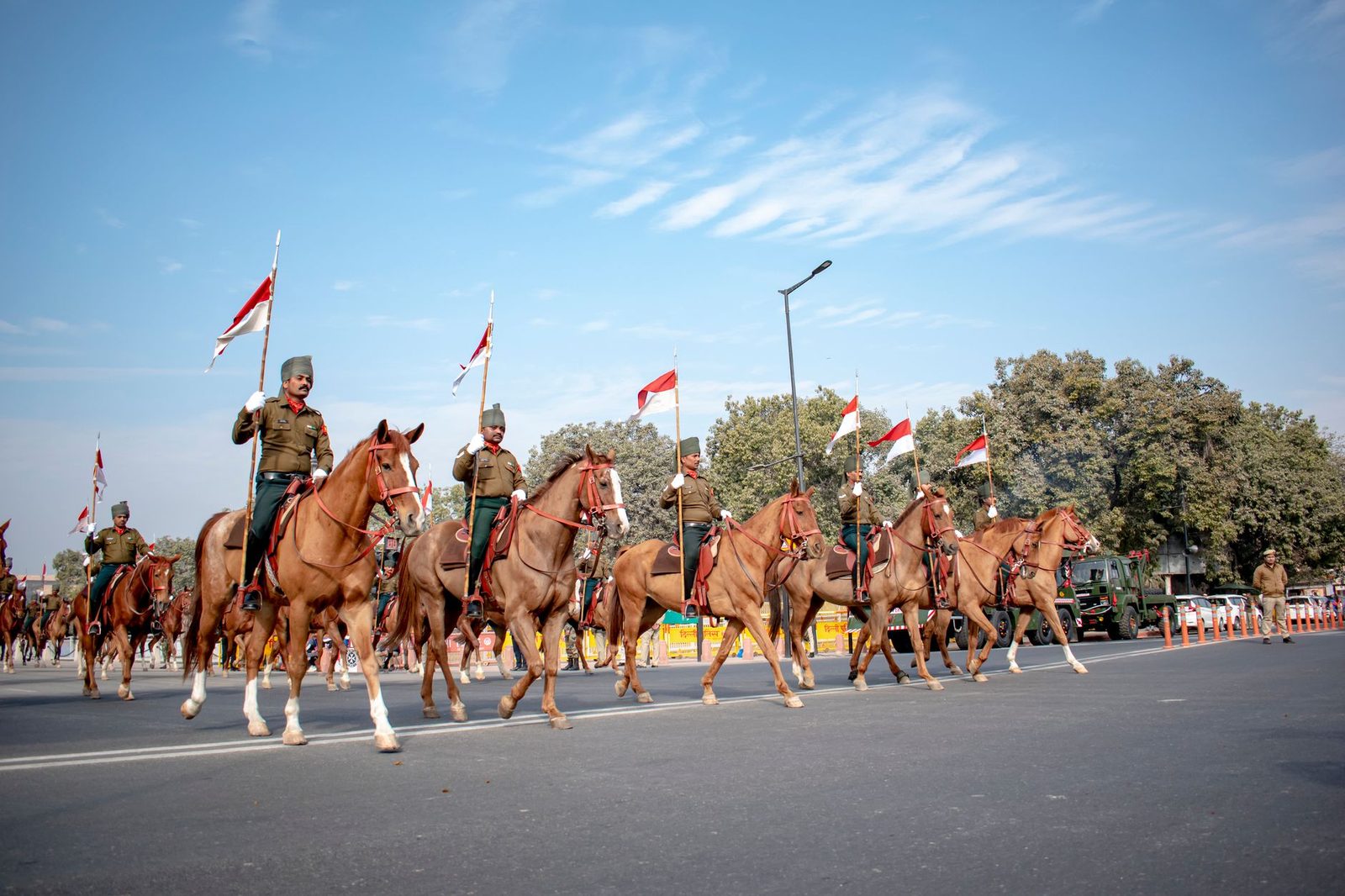
Whenever the President attends a major national event, all eyes turn to the security arrangements around them. At the Beating Retreat ceremony held after Republic Day, mounted soldiers in distinctive uniforms are seen accompanying the President. These soldiers belong to the President's Bodyguard (PBG). Their elaborate uniforms, horses and discipline give the unit a distinct identity.
The presidency is one of the country's most important constitutional posts, so the selection of soldiers deployed for the President's security is not done in an ordinary way. The PBG is the Indian Army's oldest regiment. It was raised in 1773 in Banaras by the then Governor-General, Warren Hastings. At the time it comprised 50 mounted soldiers, a number that was later increased. After India became a republic in 1950, the unit was renamed the President's Bodyguard.
Soldiers are recruited into the President's Bodyguard only from the Jat, Sikh and Rajput communities. Historically, the regiment has followed a tradition of recruiting from these communities alone. However, selection into the PBG is based on specific physical ability, military competence and a difficult selection process. In other words, belonging to a particular community is not enough on its own; a soldier must also clear several tough criteria. This is why the PBG is considered an elite, special unit of the Indian Army.
Physical ability is extremely important for soldiers joining the PBG. Taller soldiers with a strong build are considered suited to the role. But height alone does not make someone the President's bodyguard. The selection process also assesses fitness, horsemanship and military capability. According to official information from Rashtrapati Bhavan, the PBG today selects only soldiers with specific physical attributes, who must go through a demanding physical selection process for this.
The PBG should not be seen merely as a ceremonial unit. Besides being skilled horsemen, its soldiers are also trained as paratroopers and armoured warriors. According to official information, the PBG's role has included ceremonial duties linked to the President during peacetime as well as military operations when required. This is why the responsibilities of the President's bodyguard are not limited to accompanying the President or taking part in parades. These soldiers are kept ready for every situation.
The PBG has a history of nearly two and a half centuries. Formed in 1773, the unit was first known as the Governor-General's Bodyguard. It was later called the Viceroy's Bodyguard, and after India became a republic, it was renamed the President's Bodyguard on 27 January 1950. Today the PBG is the Indian Army's oldest regiment and is regarded as the President's own military unit. Its soldiers' uniforms, the mounted contingent and the grand parade tradition set it apart from the rest of the army's units.
