

Jalgaon woman gets relief from 5-year pulsatile tinnitus at Jaslok Hospital
A minimally invasive stenting procedure at Mumbai's Jaslok Hospital ended a Jalgaon woman's five-year struggle with a whooshing sound in her ear.
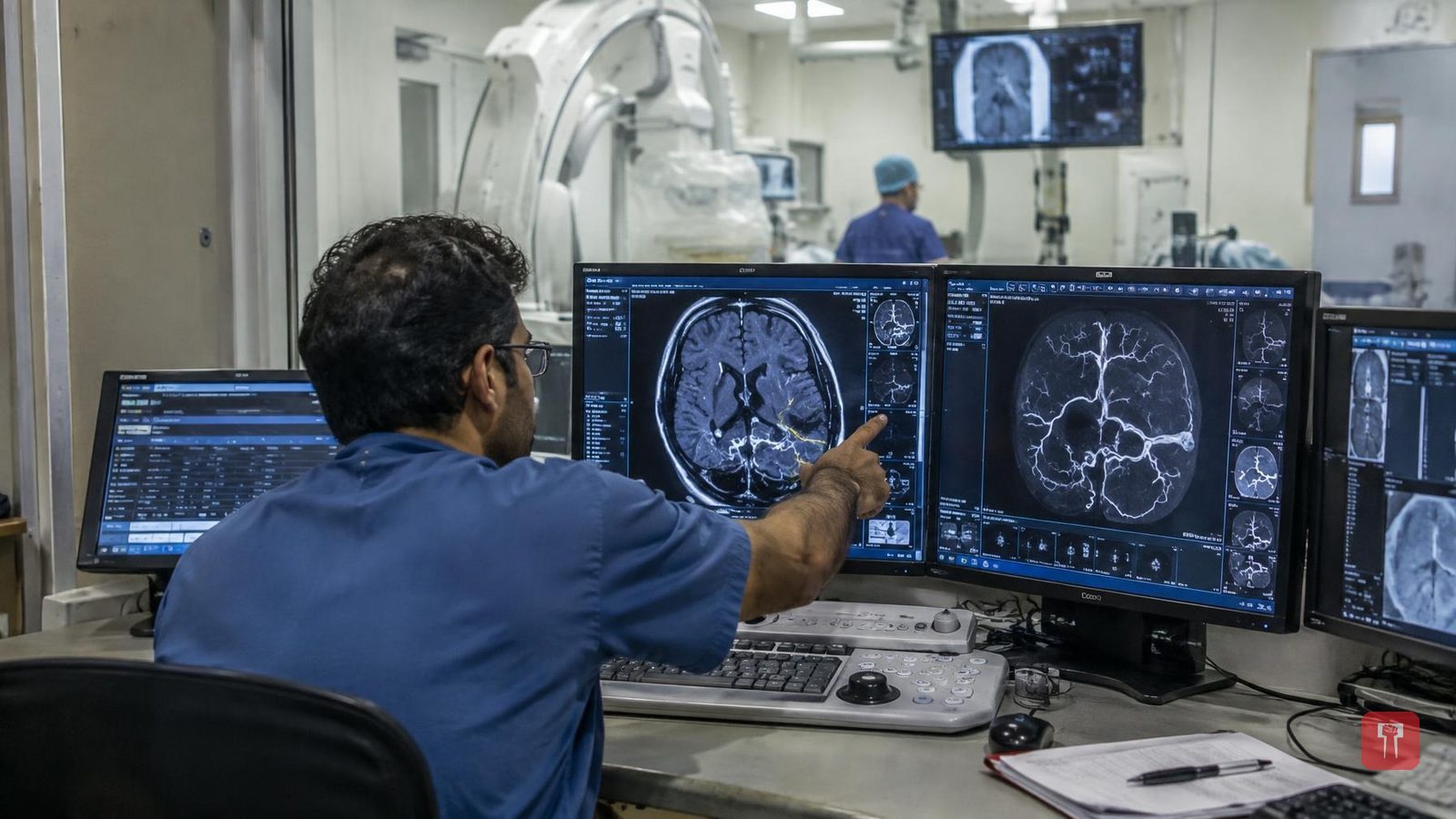
A 25-year-old woman from Jalgaon in Maharashtra had been hearing a strange whooshing sound in her ear, matching her heartbeat, for more than five years. She has now got complete relief from the condition after a minimally invasive procedure at Jaslok Hospital and Research Centre in Mumbai. Doctors said the case shows that pulsatile tinnitus patients who have suffered for years can be treated effectively once the underlying vascular cause is identified.
The woman had a constant whooshing sound in sync with her heartbeat. Over the years she consulted several doctors and underwent multiple tests and treatments, but never got lasting relief. She eventually decided to travel to Mumbai for treatment at Jaslok Hospital and Research Centre. A team there comprising neurologist Dr Fali Poncha, endovascular neurosurgeon Dr Sudhir Ambekar and haematologist Dr Sameer Shah conducted an MRI and MRV of the patient. This revealed that the main blood vessel in her brain had narrowed, a condition called venous sinus stenosis, which had disrupted blood flow and caused the rhythmic whooshing sound in her ear.
The patient underwent a minimally invasive venous sinus stenting procedure to widen the narrowed vessel. As soon as the stent was placed, the pulsatile tinnitus she had endured for five years disappeared immediately. Dr Sudhir Ambekar, endovascular neurosurgeon at Jaslok Hospital and Research Centre, said, "This condition is often misdiagnosed or dismissed as mental stress. But once correctly diagnosed, a minimally invasive procedure in which a catheter is guided from a vein in the thigh to the brain to place a stent brings immediate relief from the symptoms. Because the procedure is minimally invasive, the patient was discharged in just two days."
Pulsatile tinnitus is a very rare condition in which patients hear a whooshing or pounding sound in the ear in rhythm with their heartbeat. Globally, 14.4 per cent of adults suffer from tinnitus, but pulsatile tinnitus accounts for less than 10 per cent of all cases. According to a study in otology, only 0.09 per cent of new patients are diagnosed with the condition, and since there is no separate definition for severe cases, clear data on its severity is still not available.
Dr Fali Poncha, neurologist at Jaslok Hospital and Research Centre, said, "Instead of ignoring pulsatile tinnitus, it should be investigated thoroughly. This case is a reminder that persistent, unexplained symptoms sometimes have a treatable cause. So patients should not lose hope even after being told that nothing is wrong."
Jitendra Hariyan, CEO of Jaslok Hospital and Research Centre, said, "It is very satisfying that the patient is completely symptom-free after so many years of suffering. This case shows how essential specialised expertise and advanced minimally invasive technology are in overcoming conditions that seriously affect a patient's life. No matter how complicated or rare a patient's condition is, our goal is to give them the right diagnosis and the best treatment."
This successful treatment shows how important it is not to ignore a persistent, heartbeat-matching sound in the ear and to get it properly investigated medically. Finding the real cause of pulsatile tinnitus that remains unexplained despite multiple treatments proves to be the most crucial step towards giving the patient the right treatment and complete relief from the condition.
