

Rare Sumatran tigress gives birth to triplets at Greece's Attica Zoo
Attica Zoological Park near Athens welcomes three critically endangered Sumatran tiger cubs in a boost for conservation efforts
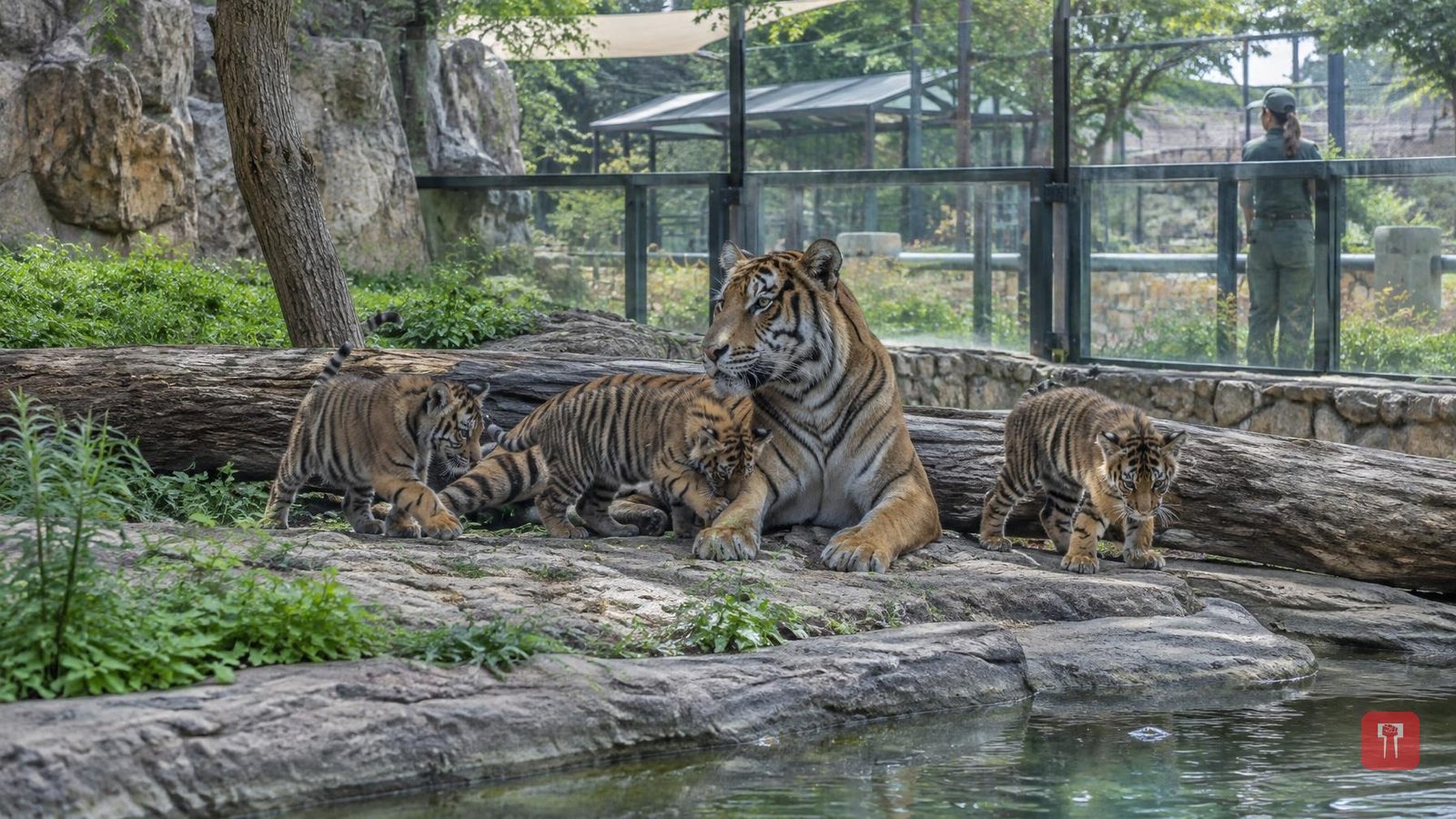
In a moment of celebration for wildlife conservation, a Sumatran tigress has given birth to three cubs at the well-known Attica Zoological Park near Athens, the capital of Greece. Sumatran tigers are classified as critically endangered internationally, and their birth has generated great excitement among wildlife lovers.
The number of Sumatran tigers worldwide is falling rapidly, and zoos in different countries are running a joint breeding programme to save the species from complete extinction. The birth in Greece is being seen as a major success for this international effort.
According to zoo officials, the three cubs, two males and one female, were born in early July. Once the cubs turned nine weeks old, the zoo's expert veterinary team successfully carried out their first detailed medical examination. During the check-up, the cubs were weighed and given the standard 3-in-1 vaccine to protect them against disease. Microchips were also implanted in all three cubs for international wildlife registration and identification. The team said that even at just two months old, the cubs' teeth and claws had already grown quite sharp.
The three cubs were born to a tigress named Toba and a male tiger named Argos. Along with this happy news comes a sad note: the cubs' father, Argos, died of cancer some time ago. This has made the care of the new cubs even more important. In a nod to Greece's ancient culture, the zoo administration has decided to name the three cubs after characters from the ancient Greek poet Homer's famous work, the Odyssey.
Sumatran tigers, whose scientific name is Panthera tigris sumatrae, are found mainly on the Indonesian island of Sumatra and are currently on the brink of extinction worldwide. The main reasons for their declining numbers are large-scale deforestation for palm oil cultivation, loss of natural habitat due to human encroachment, and illegal poaching for the international market. According to estimates by environmental experts and international organisations, fewer than 400 Sumatran tigers are currently left in the forests of Sumatra. This is why building a backup population through breeding in safe environments has become extremely important.
Sumatran tigers are considered the smallest among all living tiger subspecies. An adult male Sumatran tiger can grow up to about 8.4 feet, or 2.55 metres, in length and weigh up to 140 kilograms. They are highly agile, strong swimmers and skilled climbers. The dark, thin stripes on their bodies are unique to each tiger, much like human fingerprints.
Compared to India's famous Bengal tiger, the Sumatran tiger is considerably smaller. In India, an adult male Bengal tiger measures between 2.83 metres and 3.11 metres in length and can weigh between 200 and 260 kilograms or more, while an adult female Bengal tigress weighs between 110 and 180 kilograms. Despite being smaller, Sumatran tigers are remarkable for their hunting ability and agility. The birth in Greece has sparked new hope for the survival of this species worldwide.
