

Gauri Aagman 2026: Muhurat and full guide for first-time celebrants
A guide to timing, rituals and traditions for households welcoming Gauri home for the first time this festival season.
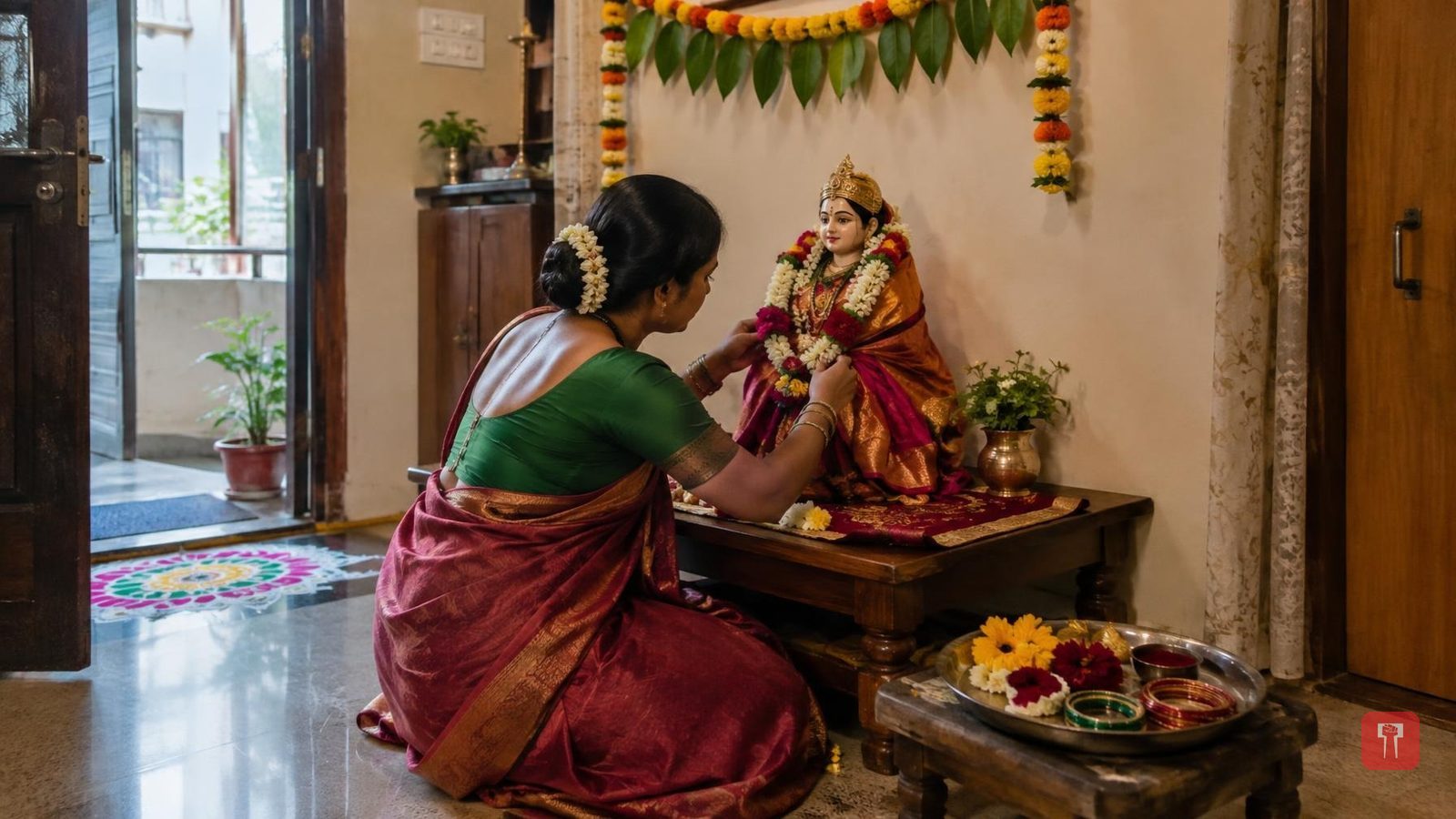
In Maharashtra, the Gauri-Ganpati festival is celebrated with great fanfare. Two to three days after Ganpati Bappa's arrival, Gauri also arrives in the home. Gauri is considered not just a goddess but a daughter who has come to her parental home, and she is welcomed the way a daughter would be welcomed. In many homes she is considered a form of Parvati, and in many others, Mahalakshmi. It is believed that Gauri's arrival brings happiness, money and good fortune into the home. But if a household is setting up Gauri for the first time, some anxiety is natural, and many questions arise about how to do it, where to bring her from, and what to do.
The first thing to understand is that there is no single fixed rule for setting up Gauri. Every household has its own way. One should first ask how the mother, grandmothers and other women elders in the family used to set up Gauri, and what naivedya (food offering) they used to prepare. Do not try to copy what is done in someone else's home. Asking the elders of the family or one's guruji what the family's own kulachar (family tradition) is remains the right approach.
In many homes, the first Gauri is brought from the mother's parental home. In some places she is brought from a close relative's home, while in others she is brought according to the in-laws' family tradition. In other words, there is no fixed rule that she must be brought in only one particular way. Whatever tradition has been followed in the family so far should be continued. If it is a new household, this should be decided after asking the family elders.
Gauri's arrival in the home is considered akin to the arrival of Lakshmi, so the home should first be cleaned thoroughly. Rangoli should be drawn at the door, torans (decorative door hangings) put up, and Gauri brought home joyfully. In many homes, small footprints of Gauri are drawn from the door right up to the household shrine, in the belief that Gauri crosses the threshold and brings happiness into the home. In some homes, Gauri is shown around the entire house, especially the kitchen, on the thinking that since a daughter has arrived, she should be shown around the house.
After Gauri arrives, a new sari, jewellery, a necklace, a gajra (flower garland) and flowers are needed to adorn her. Kumkum, turmeric and perfume should also be kept ready in advance. Since Gauri represents good fortune, special importance is given to bangles and kumkum. Which sari is to be put on her also depends on family tradition.
Those from whose home Gauri is brought are not sent away empty-handed; they are given something as a "vaan" (customary parting gift). This can include a blouse piece, coconut, fruit or items symbolising good fortune. This too varies from home to home.
In many households, two Gauris are set up, one called Jyeshtha and the other Kanishtha, that is, two sisters, who are worshipped separately. But in some homes there is only one Gauri. So whether to bring two or one should also be decided after asking within the family.
Gauri usually stays for three days. The first day is the day of arrival, when Gauri is brought home and set up, and a simple naivedya is offered. The second day is for the main puja, when a bigger puja is performed and an elaborate naivedya is prepared, including puran poli, sixteen vegetables, rice and vadas. The third day is for visarjan, when Gauri is bidden farewell.
While setting up Gauri for the first time, people will offer a lot of advice, saying that not doing a particular thing will bring dosha (fault), and that a certain thing must be done. But one need not take everything to heart. The family's own tradition is the real rule. Bring Gauri home with faith and love, and serve her; nothing else is essential. If there is any doubt regarding the guruji, it is best to ask once, so that any fear in the mind is put to rest.
