

When to remove and eat naivedya offered to Ganpati Bappa: what scripture says
Scripture does not fix a time for removing Ganpati's naivedya, but hygiene and family tradition offer practical guidance.
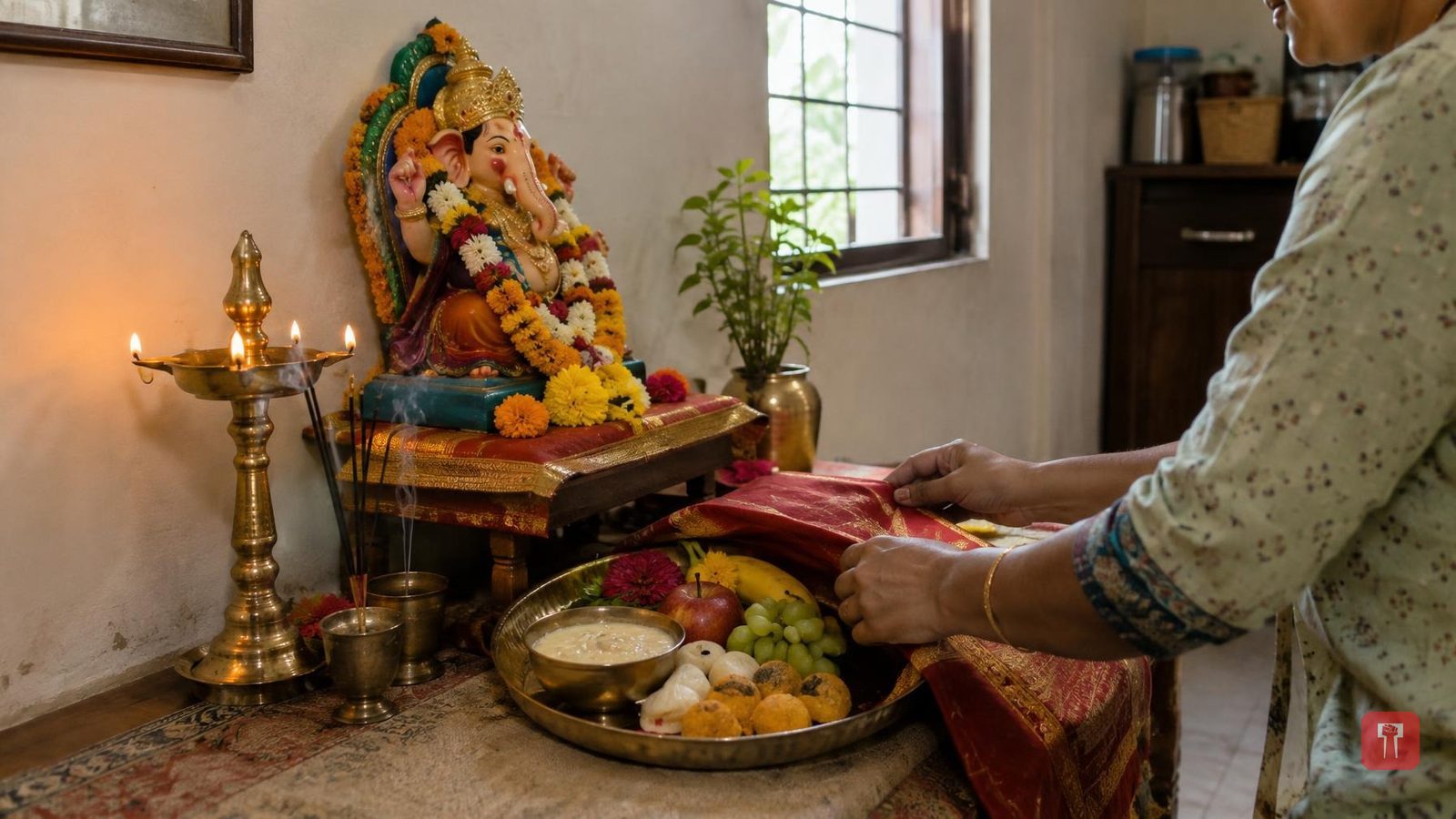
Offering naivedya to Bappa as soon as he arrives home is a tradition in every household. But a question that often comes up is when exactly this naivedya, placed in front of the deity after the puja, should be removed. Everyone knows that prasad should be eaten only after it has been offered to the deity. In the twenty-sixth verse of the ninth chapter of the Shrimad Bhagavad Gita, Lord Krishna himself says, "patram pushpam phalam toyam yo me bhaktya prayachchhati", meaning that if a devotee offers even a leaf, flower, fruit or water with a pure heart, God accepts it. In other words, this verse emphasises the devotee's devotion and the sincerity of their feelings more than the quantity or value of the naivedya.
No verse of scripture states clearly how long after the offering the naivedya should be removed. This depends on the mode of worship, the deity, the tradition followed and family custom. Even so, a general sequence can be followed in ordinary household puja. First, keep the food meant for God in a separate, clean vessel. While offering the naivedya, chant the mantra of your chosen deity. Sit quietly for a while and chant or pray. Remove the naivedya only after the aarti is done. Take a little prasad yourself first, then distribute the rest among the family.
There is also an answer to whether naivedya should be left uncovered in front of Bappa overnight. Ordinary household puja usually includes items such as milk, kheer, halwa, puri-sabzi, cooked rice, sweets and cut fruit, which should not be left uncovered overnight. The reason is not superstition but cleanliness and food safety. Dust, ants or other insects can get into uncovered food. In hot weather, milk and cooked food spoil quickly. So it is not advisable to leave the naivedya out for too long. Leftover prasad can also be kept in the fridge for convenience. This is not for any religious reason but mainly to protect health.
After the puja, milk, kheer, halwa or other perishable prasad can be kept in the fridge in a clean, covered container. Scripture says nothing against this; it does not require letting prasad spoil deliberately. Respecting food means keeping it clean, eating it on time and not wasting it. It is also best to offer God only as much as the family can eat or distribute in time.
The real meaning of offering is not how long the plate stays in front of God. According to the Gita, what matters is the devotee's pure intention. So offer naivedya with devotion, eat it only after the puja is complete, and take full care of hygiene.
