

Ganesh Chaturthi 2026: idol installation timing, immersion dates and Atharvashirsha rules
Ganeshotsav begins September 14, with the idol installation muhurat, immersion schedule and the rules for reciting the Atharvashirsha this year.
"
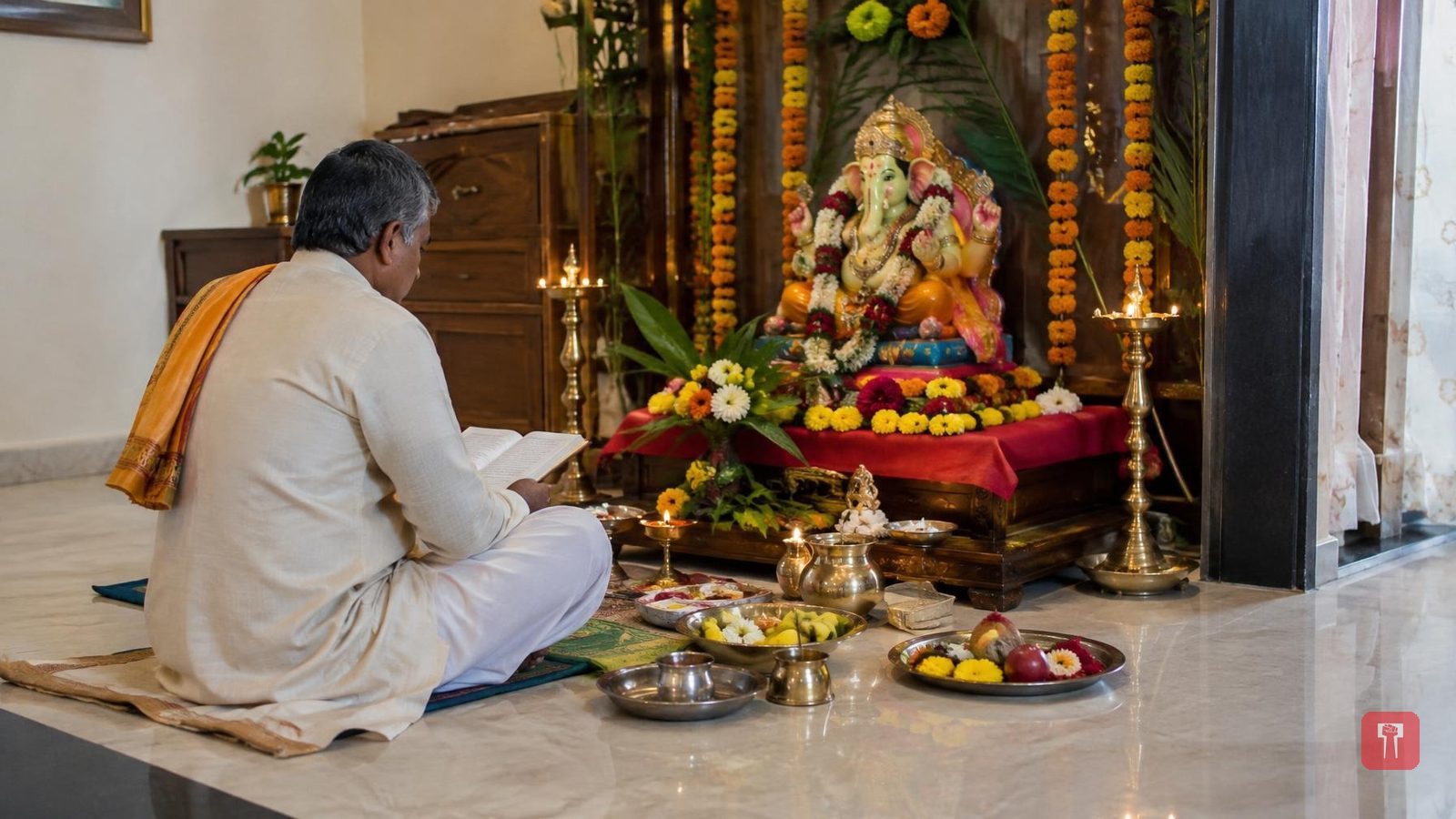
Ganpati is the deity worshipped first in every household. As the son of Shankar and Parvati, he is regarded as the lord of intellect, wisdom and the arts, which is why his name is invoked before any auspicious task or puja begins. This year Ganeshotsav starts on September 14. It is believed that worshipping Bappa according to ritual and reciting the Atharvashirsha stotra during this period removes all troubles and obstacles. Known by various names such as Vighnaharta, Vinayak, Lambodar and Ekdanta, the deity is believed to remove the sorrows of devotees, true to these names.
According to the Panchang, the Bhadrapada Shukla Chaturthi tithi begins at 7:06 am on September 14 and ends at 7:44 am on September 15. Although the tithi extends into the morning of the 15th, the installation of the Ganpati idol will take place on September 14 itself, because for the installation it is not just the sunrise tithi that matters but the presence of Chaturthi during the midday period, which is considered more important. According to belief, Ganpati was born during the midday period, and this year Chaturthi falls during the midday period only on September 14. The idol installation and puja can therefore be performed between 11:20 am and 1:48 pm on September 14. Even if the idol is brought home or to a public mandal earlier, it is considered best to perform the main installation and puja during this midday muhurat.
The main immersion of this ten-day festival will take place on Anant Chaturdashi, Friday, September 25, 2026. The Anant Chaturdashi tithi begins at 11:18 pm on September 24 and ends at 11:06 pm on September 25. For those who follow the practice of earlier immersion at home, one-and-a-half day immersion can be done on September 15, third-day immersion on September 16, fifth-day immersion on September 18, and seventh-day immersion on September 20.
Ganpati is called the "Adyapujak", meaning the deity worshipped first of all, because he is the remover of obstacles and is believed to clear difficulties in every task. This is why he is worshipped at the start of any auspicious undertaking. A special puja is also performed for Ganpati on Sankashti Chaturthi every month, since he is worshipped specifically in his form as remover of obstacles on that day. Devotees who observe a vrat on this day seek Ganpati's blessings for relief from difficulties and for good outcomes.
The Atharvashirsha is an Upanishad associated with the Atharva Veda that expounds the worship of Ganesh vidya, and it holds a special place among Ganpati devotees. It is believed to have been composed by the sage Ganak. "Atharva" means unwavering or steady, and "shirsha" means the head, so the name Atharvashirsha refers to attaining steadiness of intellect. It first describes worship of Ganpati's Saguna Brahma form and concludes by explaining him as Parabrahma. It is believed that reciting this Upanishad a thousand times yields the desired result.
Certain rules must be followed before reciting the Atharvashirsha. One should sit for recitation only after bathing. A folded washed cloth, deerskin, a blanket or a mat of darbha grass should be used for sitting, and care should be taken not to shift position during the recitation. One may sit facing any direction except south. Before beginning, one should pay respects to elders in the family and to one's guru, and if possible, perform a puja for Ganpati offering akshata, durva, shami leaves and a red flower. If a full puja is not possible, sincere meditation and obeisance suffice. The recitation should be done slowly, with clear pronunciation and with understanding of its meaning. If reciting more than once, only the portion up to "Varadamurtaye Namah" should be repeated each time, with the phalashruti portion recited only once after the final repetition. The opening shanti mantra should also be recited only once, at the start, not every time. Twenty-one repetitions of the Atharvashirsha are considered one abhishek.
"
