

Wild donkeys gifted by Iran turned Israel's Negev desert green in 44 years
Wild donkeys gifted to Israel by Iran's Shah in 1968 have transformed the Negev's Ramon Crater into a green landscape over 44 years
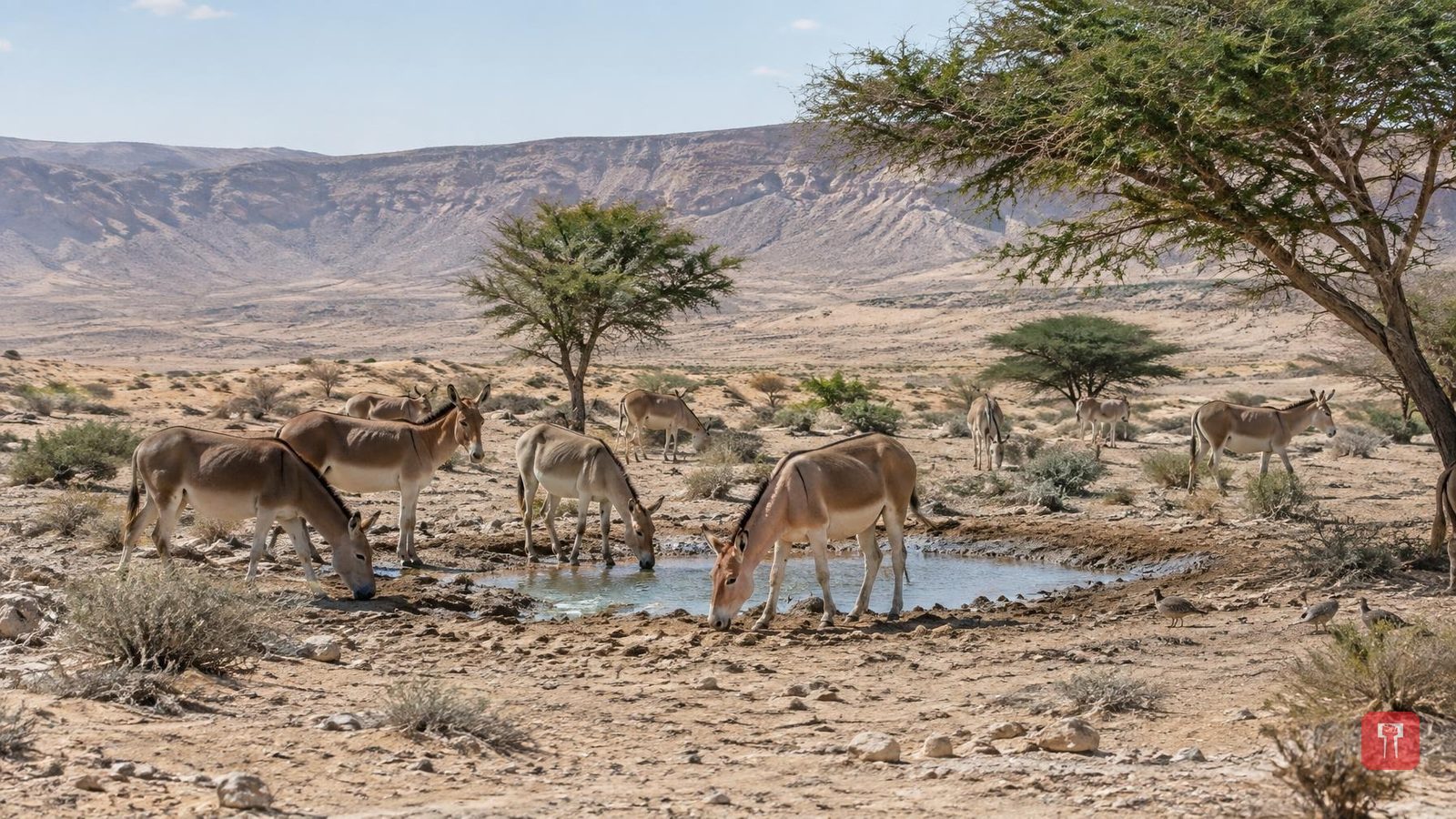
In the early twentieth century, wild donkeys were seen in large numbers in Israel's Negev desert, but uncontrolled hunting wiped out the species from the region entirely. To rebuild the desert's collapsed ecosystem and restore its ecological balance, Israeli officials and scientists drew up a bold plan: to reintroduce wild donkeys to the land. The animals brought in for this were not ordinary domestic donkeys but rare wild species on the verge of extinction, the Persian onager and the African wild ass. Bringing these donkeys to Israel required significant international diplomatic effort and a daring mission.
Before the Islamic Revolution in Iran in 1979, Iran and Israel had good, friendly relations. During this period, Avraham Yoffe, then director general of Israel's Nature and Parks Authority, held secret talks with Iran's Shah Mohammad Reza Pahlavi. Following these talks, 11 wild donkeys were gifted to Israel from the Shah's royal sanctuary in Iran in 1968. The donkeys were safely flown to the Yotvata Wildlife Reserve. Later, to maintain genetic diversity among these donkeys, Israel also brought in African wild donkeys from Ethiopia in Africa using special ships and trucks. A breeding programme for these donkeys began at the Yotvata reserve under scientific supervision.
After nearly a decade of breeding and rearing, Israeli scientists released the first group of 28 healthy wild donkeys into the extremely dry and harsh Ramon Crater area of the Negev desert in 1982. The donkeys adapted to the environment there and underwent remarkable changes in themselves. Today, 44 years later, the donkey population in this desert area has grown to more than 500 to 600. These donkeys can run at speeds of 60 to 70 kilometres per hour. Their bodies have developed the ability to withstand temperatures above 40 degrees Celsius, and they have the strength to survive for many days without water. The donkeys can endure even if their body weight drops by up to 30 percent due to water scarcity.
These donkeys have not just saved themselves, they have transformed the face of the entire desert. In the harsh summer, in search of water, these donkeys dig pits in the sand with their feet. The water that collects in these pits gives foxes, deer and other wildlife a means of survival even during droughts. Besides this, these donkeys eat acacia trees and their fruit in the desert. The juices in their digestive system soften the hard covering of the seeds, and after travelling for miles, the seeds spread across the desert through their dung, helping new trees to grow. Due to these daily movements of the donkeys, the Ramon Crater area has today turned into a lush green stretch, and environmentalists around the world are studying this model.
