

Iran tells US no talks until its conditions are met
Iran's security chief Mohsen Rezaei rejected Trump's claim that Tehran is eager for a deal, as attacks on Iranian fishing boats raised tensions further.
Tension between the United States and Iran has reached a very delicate point. US President Donald Trump had claimed that Iran was desperate for talks, but Iran has swiftly and firmly rejected the claim. Mohsen Rezaei, secretary of Iran's Supreme National Security Council, posted on the social media platform X warning the US that there would be no talks with Iran until all of Iran's conditions are met. Rezaei said Trump was misleading the world by repeatedly changing his statements.
War clouds over West Asia are growing darker, and this war of words between the two countries has become a matter of international concern. On Monday, Trump had posted a statement on his social media platform Truth Social saying that Iran, economically and militarily weakened, was very eager to reach a deal with the US as soon as possible and under any circumstances. Trump said it would be his decision whether the US would talk to them again, but that he was willing to consider the idea. Following this statement, the possibility of talks in the Middle East was being discussed, but Rezaei's response has completely put a stop to that talk.
Responding to Trump's claim, Iran's security chief Rezaei launched a sharp attack on US policies. He said no one should be misled by the American president's daily shifting statements. One day Trump says there will be no talks with Iran, and the very next day he says they are ready for talks, which exposes the instability of US thinking. Rezaei said interests linked to international oil trade and maritime routes had now changed substantially, and that it was not possible to sit at the negotiating table without the US making up for the damage it had already caused and without Iran's main conditions being accepted. Taking an even more aggressive tone, he said attempts by the US or Western countries to manage the fallout later would not fix the situation now, and that Iran would not compromise on its sovereignty and national security -- this, he said, was Tehran's final decision.
At the root of this entire political drama is a key agreement signed on June 18. On that date, the US and Iran signed a memorandum of understanding (MoU) to reduce conflict in the Middle East. The agreement required reducing military tension in Lebanon and other areas, and reaching a final agreement through talks between the two countries within 60 days. That 60-day deadline expired on August 17. But with no concrete resolution reached during that period and accusations continuing from both sides, the agreement now appears to be completely breaking down. Since the deadline passed, military action in the region has increased significantly, and the risk of direct war has arisen once again.
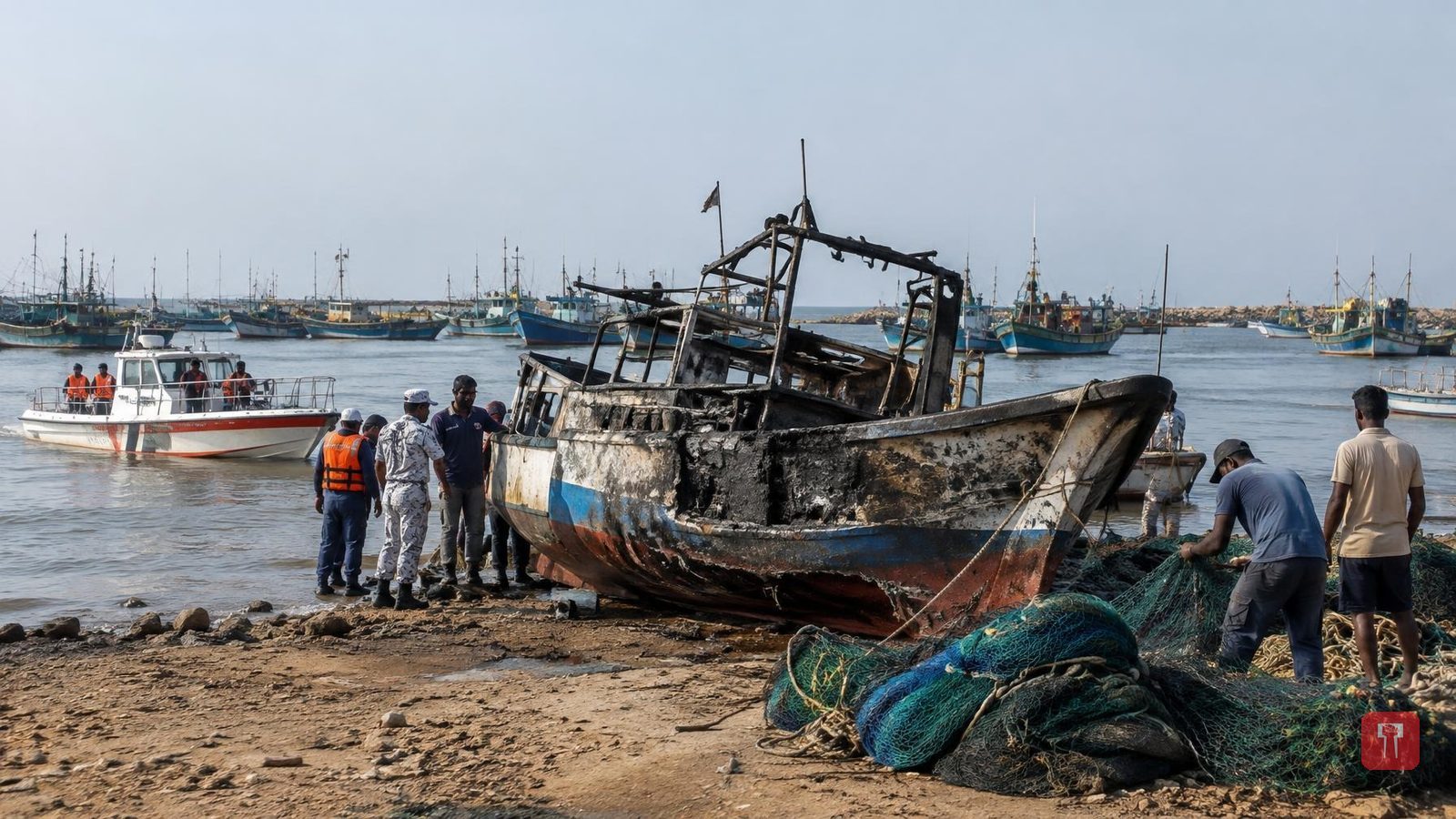
While a war of words continues at the political level, military attacks have actually intensified on the ground. On Monday night, a shocking incident occurred on Iran's southern coast, where two Iranian fishing boats were directly attacked by drones. The attacks took place near the coast of the southern port city of Kharg and near Larak Island. It is suspected that drones belonging to the US or its allied countries may have been behind the attacks. Ahmad Nafisi, deputy governor for political and security affairs of Hormozgan province, officially confirmed the incident. Nafisi said the sudden attack caused heavy damage to the boats and that several local fishermen went missing at sea. An emergency search and rescue operation is under way to find and save the missing fishermen. The administration has said clearly that the true nature of the attack and the extent of the damage will only be known once the investigation is complete. The incident has spread heavy tension and fear along Iran's coastal areas.
