

Raj Thackeray slams UPI payment charge as a 'digital trap' set by Centre
MNS chief Raj Thackeray attacked the central government's move to levy MDR charges on large UPI merchant transactions from October 15.
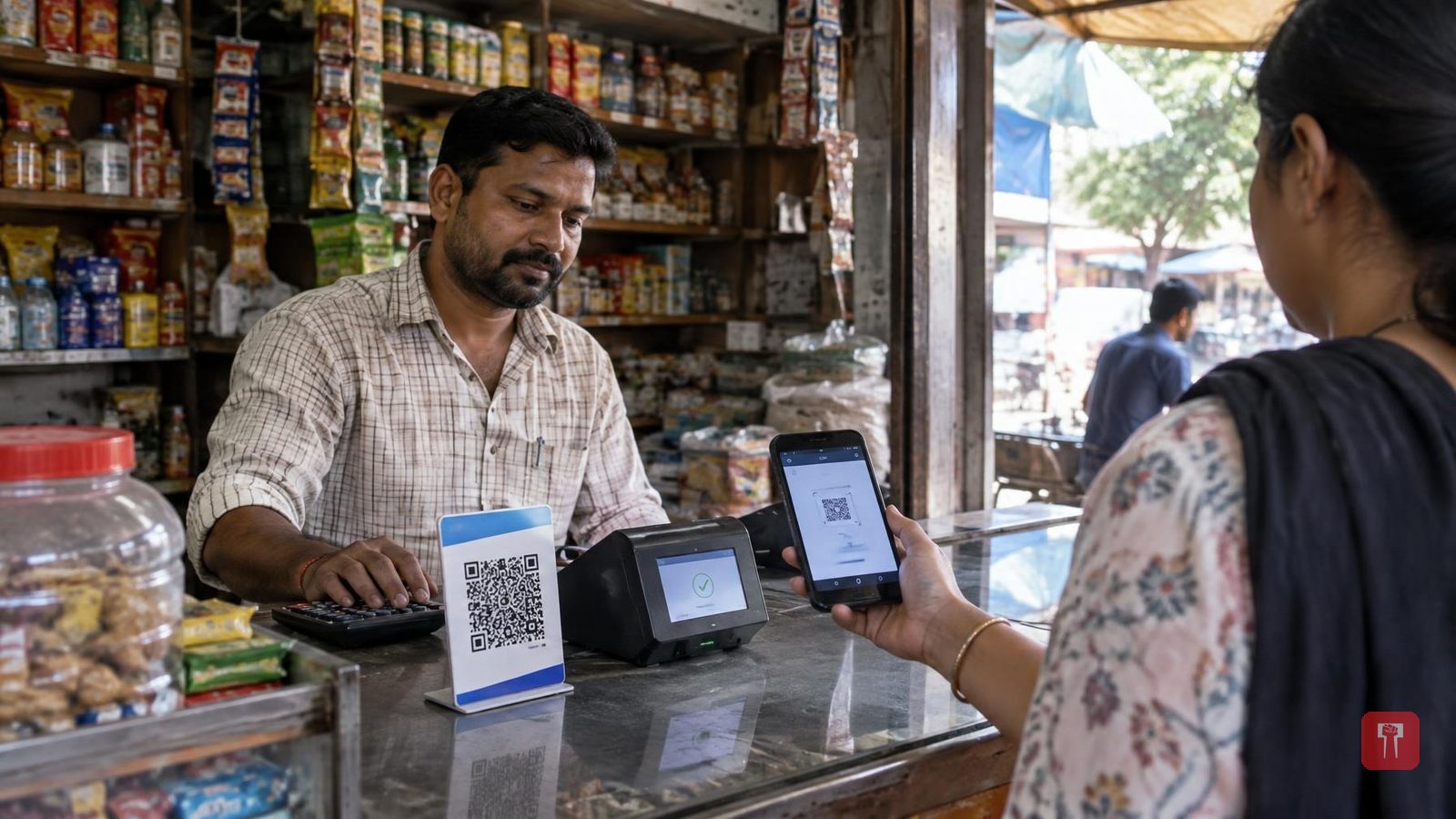
The central government's decision to levy an MDR charge on large merchant transactions made through UPI has triggered political controversy. Maharashtra Navnirman Sena chief Raj Thackeray launched a sharp attack on the central government through a social media post, calling it a knock on the door, and raised several questions about the decision.
Under the new rules, from October 15, 2026, a 0.4 percent MDR will apply to eligible person-to-merchant, or P2M, UPI transactions above Rs 2,000. This charge will be recovered from merchants. For transactions of Rs 75,000 or more, the maximum MDR has been capped at Rs 300. However, person-to-person UPI transactions will continue to remain free.
Raj Thackeray questioned the central government's intent on the issue, criticising it for first getting people into the habit of UPI to promote digital transactions, and now levying a charge on the same system.
Posting from his official X account, Raj Thackeray said, "The central government has laid a 'digital trap' for Indians, whether traders or customers, by levying a charge, not on all transactions but on UPI transactions, called the 'merchant discount rate' in simple terms. First came demonetisation, then the UPI system was brought in to show how we are promoting digital transactions. It was then widely publicised, self-praise was arranged, people were made habituated to it, and suddenly one day it was announced that these transactions would now be charged. In short, citizens were kept engaged and quietly trapped in a 'digital trap'. I have been saying for several years now, do not be careless or assume everything is going smoothly. This government will knock on your door sooner or later. And that has already begun."
He further said, "The government brought in the UPI system for digital transactions. It expected a response and got one, that is fine. But if the intent behind bringing in a digital payment system to ease financial transactions was truly so clear, why was no provision made from the day this payment infrastructure was invested in, to keep it running without hitting the common man's pocket? If money was going to be needed for the long-term upkeep of such payment systems or for cyber security, why was that not permanently provided for in the budget?"
He also said that if it were possible, the finance minister would levy 18 percent GST even on breathing. He said that if a customer makes a purchase of more than Rs 2,000, a 0.4 percent MDR will apply, and the government says traders will bear this burden, but what guarantee is there that traders will bear it themselves and not pass it on to customers, does the government have any system for this, the answer is absolutely not. He also asked whether Prime Minister Modi, who used to promote UPI abroad and pat himself on the back, would now, when he goes abroad again, cheerfully explain how MDR and GST were imposed.
Raj Thackeray said the Congress party has alleged that all this was done under pressure from the American government. He said he had no information about this, but asked whom the central government consulted while taking this decision, or whether it can say with certainty that there was no unease among foreign card companies and global payment systems, the answer is no. There must be pressure on the government from somewhere, and it used that to fill its own coffers, he said.
He said the question is not of four paise or forty rupees, the question is of the government's intent. Whether it was demonetisation or digital payment transactions, the government's intent has never looked clear in this. The question of who would bear the cost of running UPI should have been thought through when the system was being set up. This was not done, or it was decided from the start not to do it. In 2022, the finance ministry had clearly said that no charge would be levied on UPI. But even while saying that, it had already been decided when to reach into people's pockets. The government should not give the weak argument that it is not charging on person-to-person transactions. The government has laid a digital trap, and every Indian is now caught in it.
Raj Thackeray and his party, Maharashtra Navnirman Sena, have opposed the MDR. They have appealed to traders to fully resist paying this charge. He also shared a screenshot of the finance ministry's official X account post from August 21, 2022, in which the government had announced that no charge would be levied on UPI transactions.
Following this announcement, the debate over UPI's MDR is expected to intensify further among traders, customers and the central government. While the government is raising the issue of making the UPI system financially sustainable, opposition parties and some trader bodies fear the charge will affect digital transactions.
