

Yemen: Fierce fighting between government forces and Houthi rebels kills 44 in 24 hours
Clashes in Taiz and Lahij provinces leave dozens dead as Houthi rebels press their advance after seizing Mokha port and Perim island.
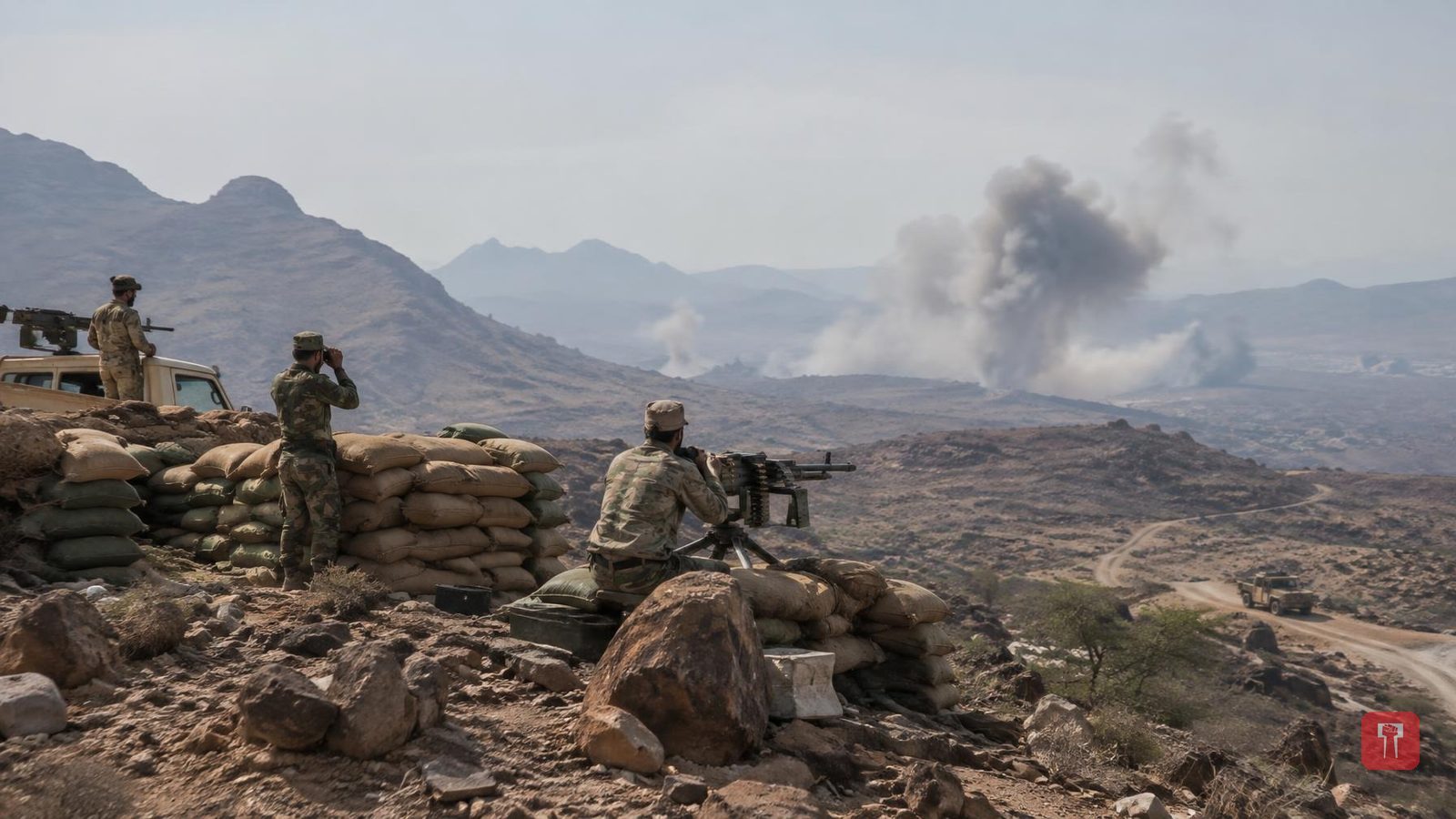
Yemen's civil war has reached a dangerous new phase, with fierce clashes between the internationally recognised government forces and Iran-backed Houthi rebels on multiple fronts killing at least 44 people in the past 24 hours.
The violence took place in the southwestern provinces of Taiz and Lahij, raising serious concerns for trade routes and security across the wider Red Sea region.
According to local military sources, both sides have begun sending additional troops and advanced weapons to reinforce their positions in strategic areas. Fighting has been fiercest around Kahabub, al-Qadha and al-Waziya, near the Bab al-Mandeb strait, a critical chokepoint for global maritime trade.
A senior government military official, speaking on condition of anonymity, said heavy gunfire and missile attacks continued along the Taiz and Lahij fronts. Houthi rebels launched repeated attacks aimed at seizing government military posts and key positions in al-Qadha and al-Waziya in Taiz province, sending large numbers of fighters in an attempt to break through government lines.
Government forces said they repelled all the Houthi attacks. Six government soldiers were killed in the clashes, while the government said its counterattacks killed 11 Houthi fighters. Intermittent gunfire continued in the area as both sides sought to hold their ground.
The remote hilly area of Kahabub in Lahij province, considered important for monitoring international shipping lanes, has become a key centre of the fighting, with heavy losses reported on both sides. The government military official confirmed that 12 government soldiers were killed there in the past 24 hours fighting the Houthis. Houthi military sources also acknowledged heavy losses in the area, claiming 15 of their fighters, including a senior commander, were killed in the clashes at Kahabub. Both sides have stepped up the use of artillery and heavy weapons there, spreading fear among the local population.
The latest violence has its roots in events earlier this month. Since early September, Houthi rebels had been advancing rapidly along Yemen's southwestern Red Sea coast. On September 10, they seized full control of the strategic port city of Mokha, and the following day, September 11, they took control of Perim island, known locally as Mayyun, which sits in the middle of the Bab al-Mandeb strait.
Emboldened after seizing Perim island and Mokha port, the Houthis have pushed further on the ground to try to establish dominance over Taiz and Lahij provinces, an area through which a large share of the world's oil and trade traffic passes, drawing close attention from the international community.
Yemen's brutal conflict began in late 2014, when the Shia Houthi rebels seized the capital Sanaa and much of northern Yemen, toppling the government of the time. In March 2015, a Saudi Arabia-led international coalition intervened militarily to try to restore the official government to power.
The decade-long civil war has killed hundreds of thousands of people and displaced tens of millions. The United Nations has repeatedly described the situation as the world's largest humanitarian crisis. The renewed fighting has further dimmed hopes for peace, plunging Yemen back into a highly destructive conflict.
