

Why the mangalsutra has black beads despite black being avoided on auspicious occasions
Black beads in the mangalsutra are seen as protective rather than inauspicious, with both religious and astrological explanations behind the tradition.
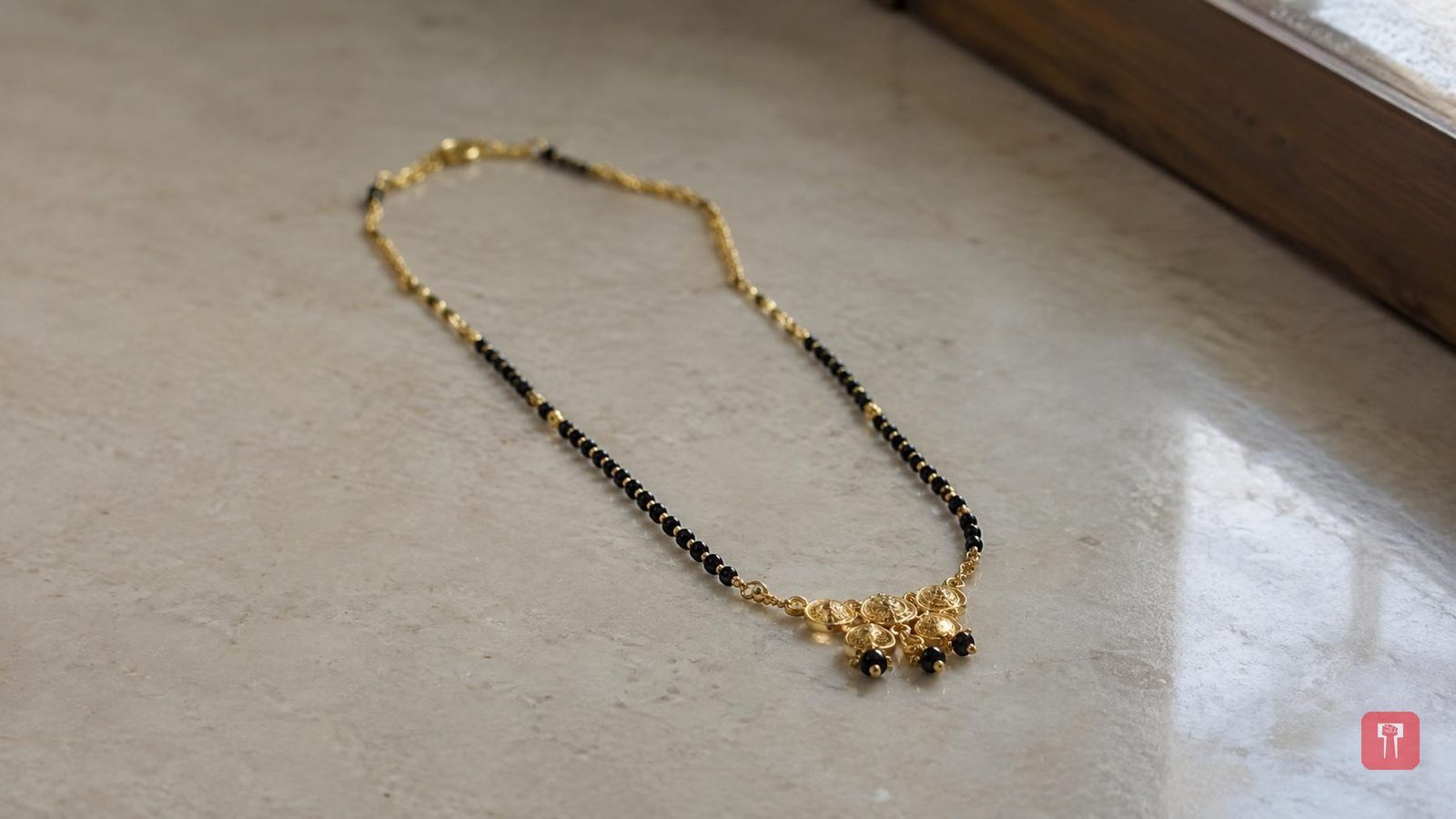
Everyone knows that women wear a mangalsutra after marriage. It has gold along with black beads. But a question arises: in Hindu tradition, black is usually avoided on auspicious occasions, so why is such importance given to black beads in the mangalsutra. Both religious and astrological beliefs are cited behind this.
According to Sanatan tradition, the mangalsutra is worn after marriage as a symbol of marital happiness. It is said that the black beads of the mangalsutra act as a shield protecting against negative influence and the evil eye. Just as a black dot is applied to ward off the evil eye, the black beads of the mangalsutra are also linked to protecting married life.
Another belief holds that the mangalsutra is a symbol of the union of Lord Shiva and Goddess Parvati. In it, gold represents power and prosperity, while the black beads are said to be linked to Lord Shiva. In this way, the gold and black beads together in the mangalsutra become a symbol of balance, strength and protection in the relationship between husband and wife.
From an astrological point of view too, these two parts of the mangalsutra are considered special. Gold is linked to the planet Jupiter, which is considered the planet of happiness, prosperity, knowledge and children. Black, meanwhile, is said to be linked to the planet Saturn. This is why these two parts of the mangalsutra are associated with stability and balance in married life.
The mangalsutra is usually worn around the neck in such a way that its pendant and beads rest near the upper chest. According to yogic belief, this spot is linked to the Anahata chakra. It is believed that the mangalsutra's position here affects emotional connection, love and harmony in married life.
The use of black beads in the mangalsutra is generally considered separate from the tradition of not wearing black clothes on auspicious occasions. Here, black is not seen as a sign of bad luck but as a symbol of protection that keeps negative influence away.
