

In Konkan's Ganpati festivities, a special tradition of tying 'kavandal' to the matoli
In Konkan's traditional Ganeshotsav, the matoli decorated around Ganpati carries wild fruit, flowers and vines, including the kavandal that hangs right above the idol.
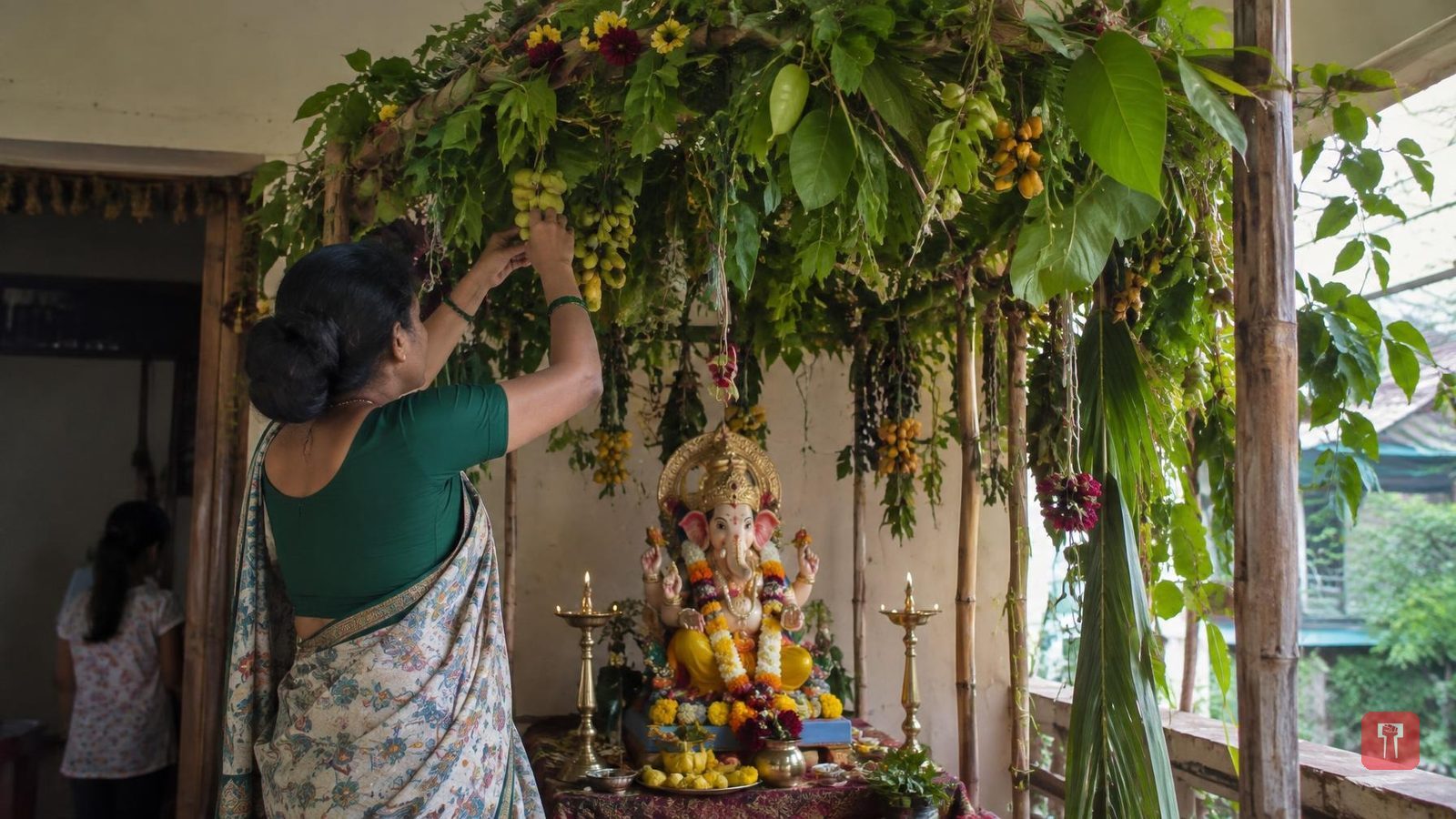
Say Ganeshotsav, and what comes to mind is a beautiful Ganpati idol, durva grass, red flowers, modaks and an atmosphere of devotion. But the traditional Ganeshotsav of Konkan has a slightly different flavour. Here, the matavi or matoli decorated around Ganpati is not mere decoration. It is seen as a coming together of nature, farming, everyday village life and devotion.
Various wild fruits, flowers, leaves, vines and clusters of plants are tied into this matavi. One special wild fruit among them is the kavandal or kaundal. It is seen tied at Ganpati's seat, or just above the idol, prompting the natural question of why the kavandal in particular is tied above Ganraya. The answer is not hidden in a religious reason alone, but in several things tied to Konkan's nature and the life of its people.
A matavi is a canopy of leaves, flowers and wild fruits set up around or above the Ganpati idol. In many Konkan households, the practice of decorating the matavi after installing Ganpati continues even today. Earlier, instead of decorations bought from the market, plants found in the forest around the village, in the fields or on the malran (fallow upland) were given greater importance in this decoration. The matavi thus becomes, as it were, an offering to Ganraya of nature in full bloom during the monsoon. In the months of Shravan-Bhadrapad, rains turn Konkan lush green, trees put out new leaves, vines flower and wild fruits hang heavy. Offering this gift of nature from that season at Ganraya's feet reflects gratitude towards nature.
Kavandal is a wild vine found in the local area, and because of its distinctive fruit it stands out immediately in the matavi. In some places it is also known by other local names. When clusters of kavandal are tied into the matavi, a beautiful natural decoration takes shape around Ganpati's seat. But this decoration is not only for looks. It is a symbol of the old tradition of offering everything received from the forest to God as naivedya. Ganpati is regarded as the deity of wisdom, auspiciousness and prosperity, so worshipping him by remembering the fruits, flowers, leaves and grain given by nature reflects the sentiment that whatever nature gave is offered to God first.
According to popular belief, Ganpati's mother Parvati is regarded as a form of Adishakti. In Indian tradition, the earth, nature and maternal power are seen as linked to one another. Surrounding Ganraya with lush green plants, then, is an emotional idea of placing him in nature's lap. In the case of Ganpati, son of Shiva and Parvati, it is said that Shiva represents consciousness and Parvati represents nature.
People in earlier times lived much closer to nature. Many forest plants were used in food, medicine, home remedies and religious rites. This old knowledge may also be a reason behind tying different wild plants into the matavi, so that wild plants like kavandal remain known to the next generation and villagers' connection with the forest continues.
Tying fruit-laden vines and wild fruits into the matavi also carries a sense of prosperity. In folk tradition, fruit represents earnings, seed represents the life ahead, and green leaves represent growth and vitality. Before installing Ganpati, activity begins to gather the plants needed for the matavi, and the elders of the household teach which leaves to pick and which fruits to tie. In this way, the recognition of local plants and the tradition itself passes from one generation to the next.
