

After Nepal floods, report warns Himalayas pose growing risk to India too
An advance excerpt of a report on the Himalayas warns of glacier melt, lake outburst floods and risks to India's water, farming and power supply
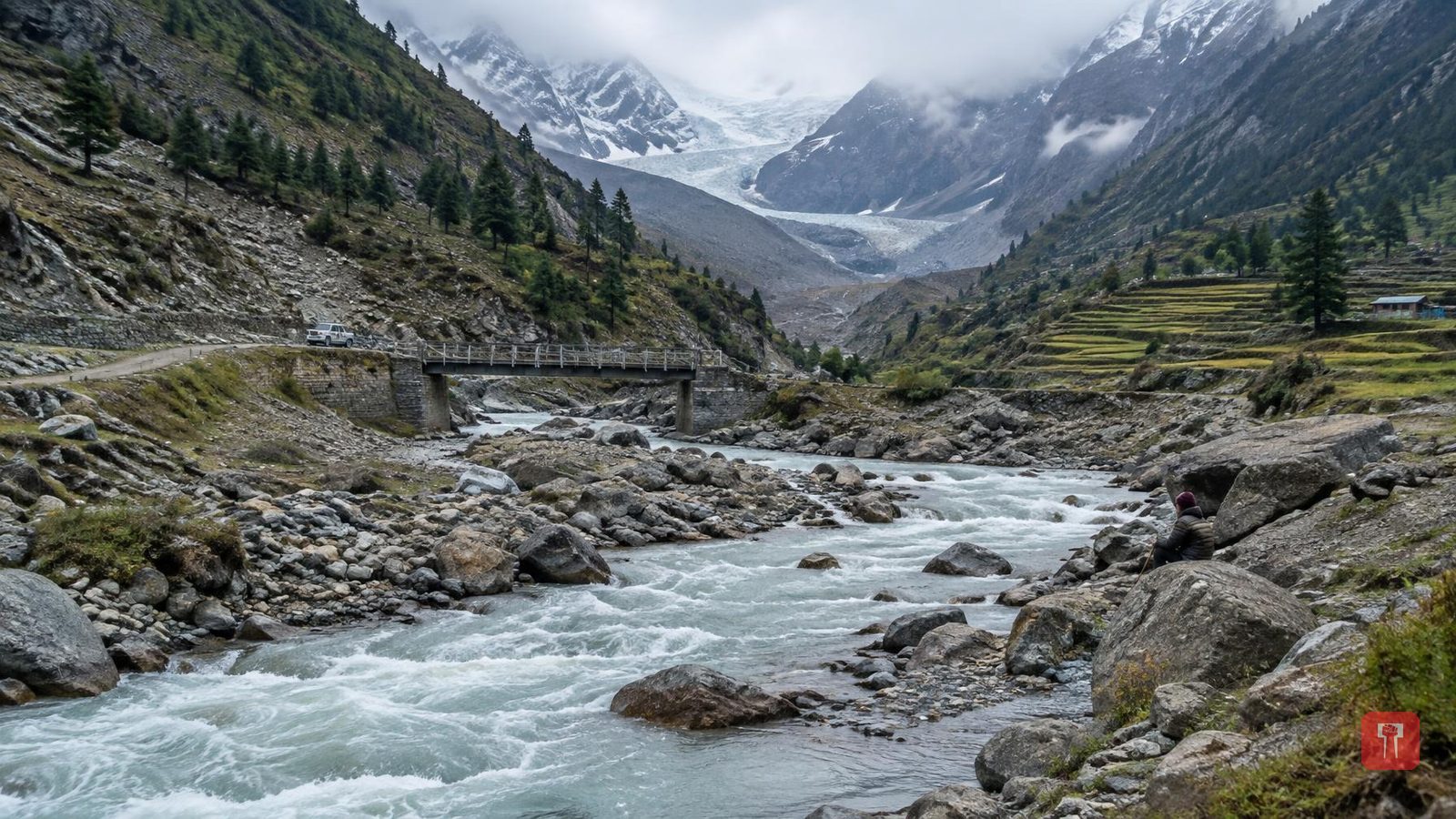
Barely a month after the floods in Nepal, a key report on the Himalayas has been released ahead of schedule. The full report was due in October, but a portion of it was suddenly released after the major disaster on the Nepal-Tibet border on August 26. The report is titled "Prosperous and Resilient Himalaya", and its cover describes it as a "special issue", a kind of emergency edition.
The report warns that it would be a big mistake to think of the Himalayas as just a mountain range, since India's water, agriculture, power and economy are directly linked to it. It says water flowing from the Himalayas supports more than 20 percent of India's GDP. Rivers originating here supply water to farms, generate electricity and meet the needs of cities. This means that if the natural systems of the Himalayas weaken, it could directly affect the country's economy.
The report also says the plains states face the greatest risk from disasters such as floods and landslides, not the hill states. It adds that basic facilities such as roads, buses, schools and hospitals cost far more to provide in the mountains than in the plains.
Parts of the Himalayas are warming two to three times faster than the global average. This is having its biggest impact on glaciers, which are melting and retreating rapidly. Glaciers do not only meet today's water needs, they are also a natural store of water for the future. In summer, glaciers release water gradually, and as temperatures rise, melting ice can initially raise river water levels, but this does not last. A point comes when glaciers shrink so much that they can no longer provide enough water, a stage called "peak water". According to the report, most river valleys in the Himalayas could reach this stage by the middle of this century, meaning that although rivers may carry more water today, water shortages could increase in the future.
As glaciers retreat, large lakes form in the mountains, often held back by a natural wall of soil, rock and ice. When this wall breaks, the lake's water bursts out suddenly, carrying large amounts of rock and debris with it. Such events are called Glacial Lake Outburst Floods, or GLOFs. Citing government data, the report says 189 glacial lakes in India are in the high-risk category and 56 are in the very-high-risk category. These lakes are located in Uttarakhand, Himachal Pradesh, Sikkim, Arunachal Pradesh, Ladakh and Jammu and Kashmir.
Such disasters have struck the Himalayas before. Thousands were killed or went missing in the 2013 Kedarnath disaster. More than 200 people died in the 2021 disaster in the Rishiganga area of Chamoli. In 2023, a glacial lake burst in the Teesta area of Sikkim causing heavy destruction. These events show that any incident in the mountains can reach vulnerable people in moments.
The danger is not limited to glaciers. The Himalayas are also facing growing problems with permafrost, ground that remains frozen year-round. This is a layer of soil and rock that has stayed frozen for a long time. As temperatures rise, it can thaw, weakening the ground in the mountains and increasing the risk of landslides. According to the report, there are about 40,000 glaciers in the Hindu Kush Himalaya region, but only 21 of them are continuously and fully monitored. This shows the need for sustained monitoring of such a large area and such a large number of glaciers, in order to strengthen early warning systems.
Many of India's major rivers originate in the Himalayas, and this water is vital for agriculture, power, industry and cities. So the melting of Himalayan glaciers, the drying up of springs and the weakening of the mountains are not just environmental problems, they can directly affect water, farming, power, roads, business and people's safety.
The report makes several recommendations to protect the Himalayas, including increased monitoring of glaciers and lakes, stronger flood warning systems, reviving springs, cutting black carbon emissions and protecting forests. It also says that construction in the mountains should properly assess the land and potential hazards, meaning that areas at high risk of floods or landslides should not see construction without due care.
The Himalayas are not just a symbol of India's beauty or tourism, they are the country's biggest source of water and natural resources. If glaciers continue to melt at this pace, springs keep drying up and pressure on the mountains keeps rising, the impact will not be limited to Uttarakhand, Himachal Pradesh or Sikkim. This growing Himalayan risk could gradually be felt in Delhi, Uttar Pradesh, Bihar and other plains regions of the country as well. Protecting the Himalayas, therefore, is not just about protecting the mountains, it is about securing the future of millions of Indians.
