

PM Modi lays out India's green plan, from hydrogen trains to nuclear power
At an international conference, PM Modi detailed India's progress on clean transport, renewable energy, EVs and water and forest conservation
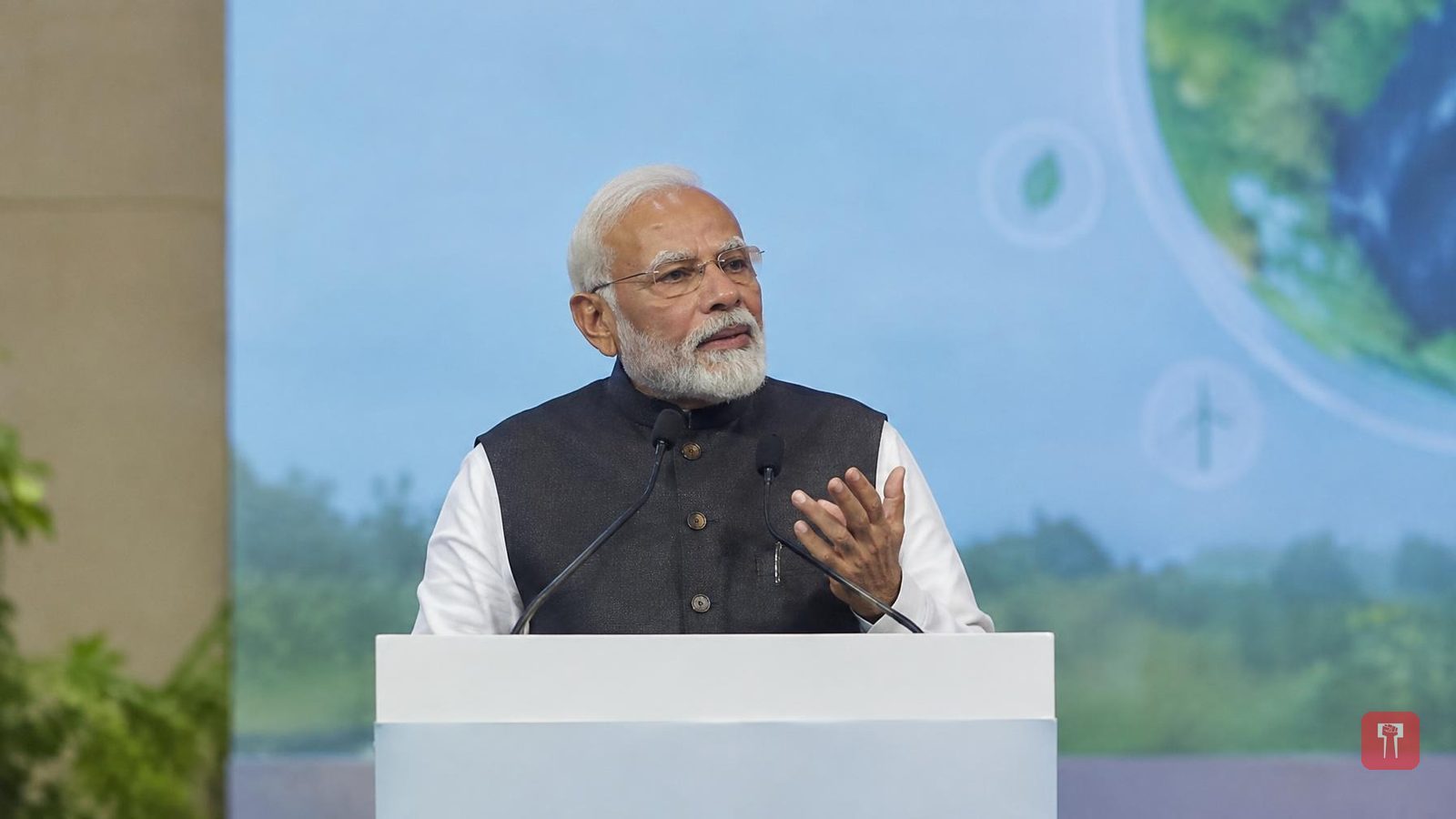
Prime Minister Narendra Modi, speaking on Saturday at an international conference themed "The Future of Environment and Climate Dynamics", gave a detailed account of India's environmental work. He also laid out the country's plans for the changing climate, saying India is moving fast in sectors like clean transport and green hydrogen.
Modi said that a few days ago India ran its first hydrogen train, which is also the world's longest hydrogen train. He called it the start of a new era of clean transport.
Modi said the country's wind energy capacity has tripled in the last 12 years. Hydropower capacity has also grown significantly, and India is now focusing on nuclear energy as well. He said the government is giving private companies opportunities in these sectors too. These efforts together have led to a 400 percent increase in the country's non-fossil energy capacity.
On e-mobility, Modi said that before 2014, India sold only about 3,000 electric vehicles a year. Last year, around 2.5 million EVs were sold, which he called a big leap that is helping protect the environment. FASTag has also significantly cut waiting time and fuel wastage at toll booths. Modi said that until 2014, only five cities in the country had metro networks, totalling less than 250 kilometres, while today more than 20 cities have metro networks spanning over 1,000 kilometres.
Modi said full electrification of the railways has saved lakhs of litres of diesel, benefiting the environment as well. He said the country's development is both fast and sustainable, and that work on water conservation is happening at a scale never seen before.
More than 70,000 Amrit Sarovars have been built so far. Under the "Catch the Rain" campaign, around 1.5 crore water conservation structures have been built across the country. The National Mission on natural farming has also brought a major change, with natural farming clusters created across 1.25 million hectares. About 3,000 climate-resilient crop varieties have been developed. Modi said India is cutting its carbon footprint by promoting agro-forestry.
The country's dense forest cover has grown by 22 percent over the last 12 years. Speaking on the challenge of plastic waste, Modi said this is why India has banned single-use plastic. The "reduce, reuse and recycle" approach has been used to promote a circular economy, and thousands of tonnes of waste are being recycled every day in India. Through the Gobardhan scheme, cow dung and other organic waste in villages is also being turned into useful products.
