

The right way to offer durva grass to Ganesha, and the legend behind it
Most devotees place durva grass at Ganesha's feet, but scripture and legend say it belongs on his head.
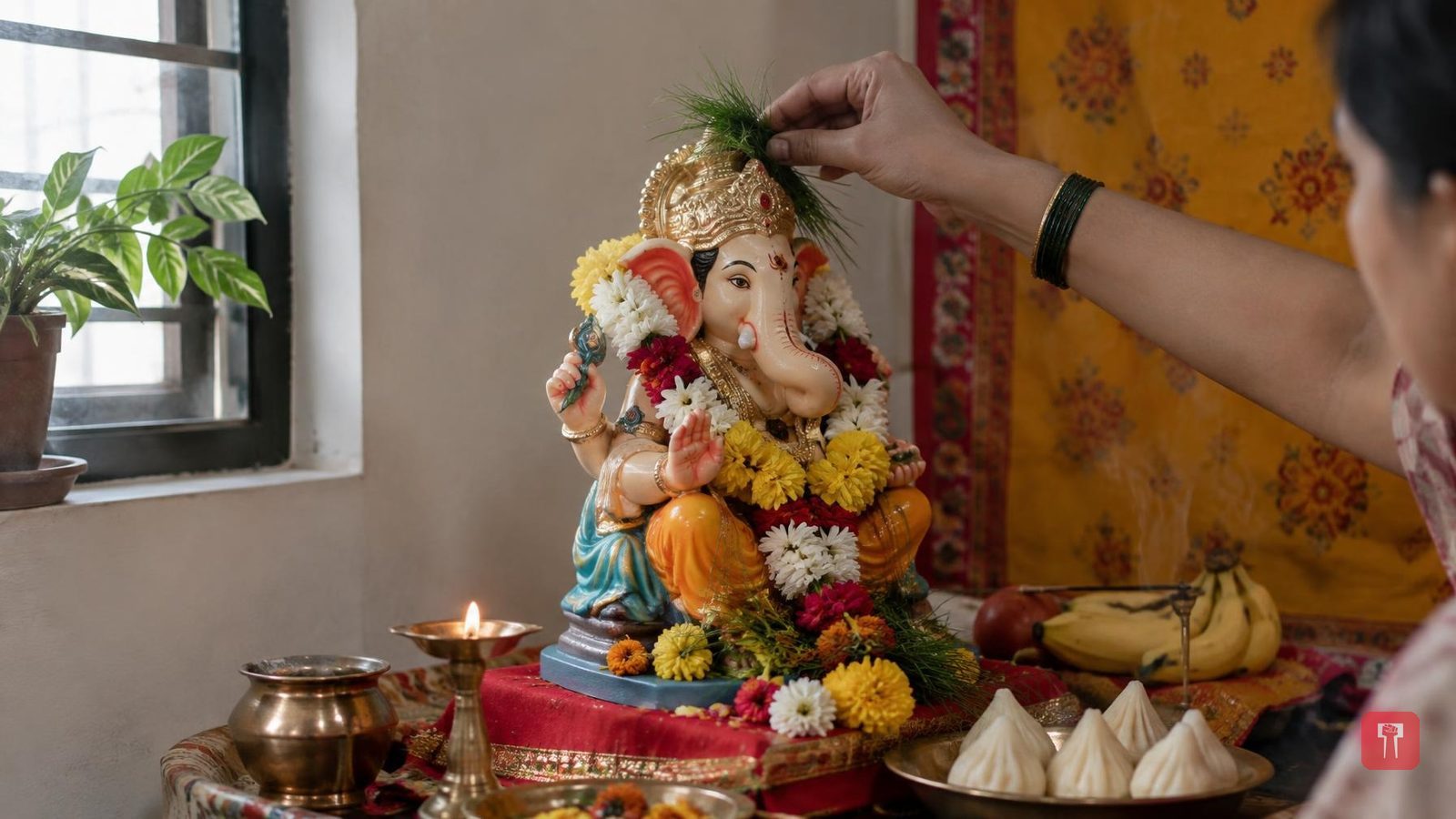
The Ganeshotsav festival runs from Bhadrapada Chaturthi, which begins on September 14, to Anant Chaturdashi. During these days, Ganesha is worshipped in homes and durva grass is offered to him, but most people pick up a bunch of durva and place it directly on his feet. According to scripture, this is incorrect. Durva should be offered on the head, not the feet, and there is an old legend behind this.
Long ago there was a demon named Analasura, who was so dangerous that fire constantly poured from his mouth. Sages, gods and ordinary people were being burnt by that fire, and there was panic everywhere. All the gods then went to Ganesha and pleaded with him to save them. To protect everyone, Ganesha swallowed Analasura whole.
After taking the demon into his stomach, the fire from the demon's body caused a terrible burning sensation throughout Ganesha's stomach and body. The burning kept increasing. The gods tried bringing the moon to cool him down and applied sandalwood paste, but nothing worked.
Ganesha's burning would not subside. Finally, sage Kashyap along with 88,000 other sages together found a solution. Each sage made a bunch of 21 durva blades and placed it on Ganesha's head. Durva is cool and medicinal, and its touch instantly calmed the burning in Ganesha's body. Ganesha felt immediate relief. Pleased by this, he said that he would always be happy with whoever offered him durva.
This legend shows where and why durva should be offered. Durva was placed on Ganesha's head, not his feet, to cool his burning body. That is why durva should always be placed on Ganesha's forehead or near his ears. If the idol is large and placing durva on the head is not possible, a garland can be made from 21 or 108 durva bunches and placed around Ganesha's neck. Flowers are offered at the feet, not durva. Durva is the plant that cools Ganesha's head, which is why it is honoured there.
One more thing should be kept in mind while picking durva. Durva always has three leaves, known as tridal. These three leaves are considered symbols of the three human qualities: sattva, raja and tama. The bunch is always made of 21 durva blades because the number 21 is especially dear to Ganesha. The human body's five senses of perception, five organs of action, five vital energies, five elements and one mind add up to 21, which is why a bunch of 21 durva is offered to him. So this Ganeshotsav, whenever you worship Ganesha, remember this small detail: instead of placing durva at his feet, place it lovingly with your hand on his head. Ganesha will surely be pleased.
