

Small cities lead the way in digital lending, Nagpur among top Tier 2 gainers: report
A new Digital Credit and Inclusion Index finds Tier 2 cities outscoring metros in digital lending, with women closing the gap fastest there.
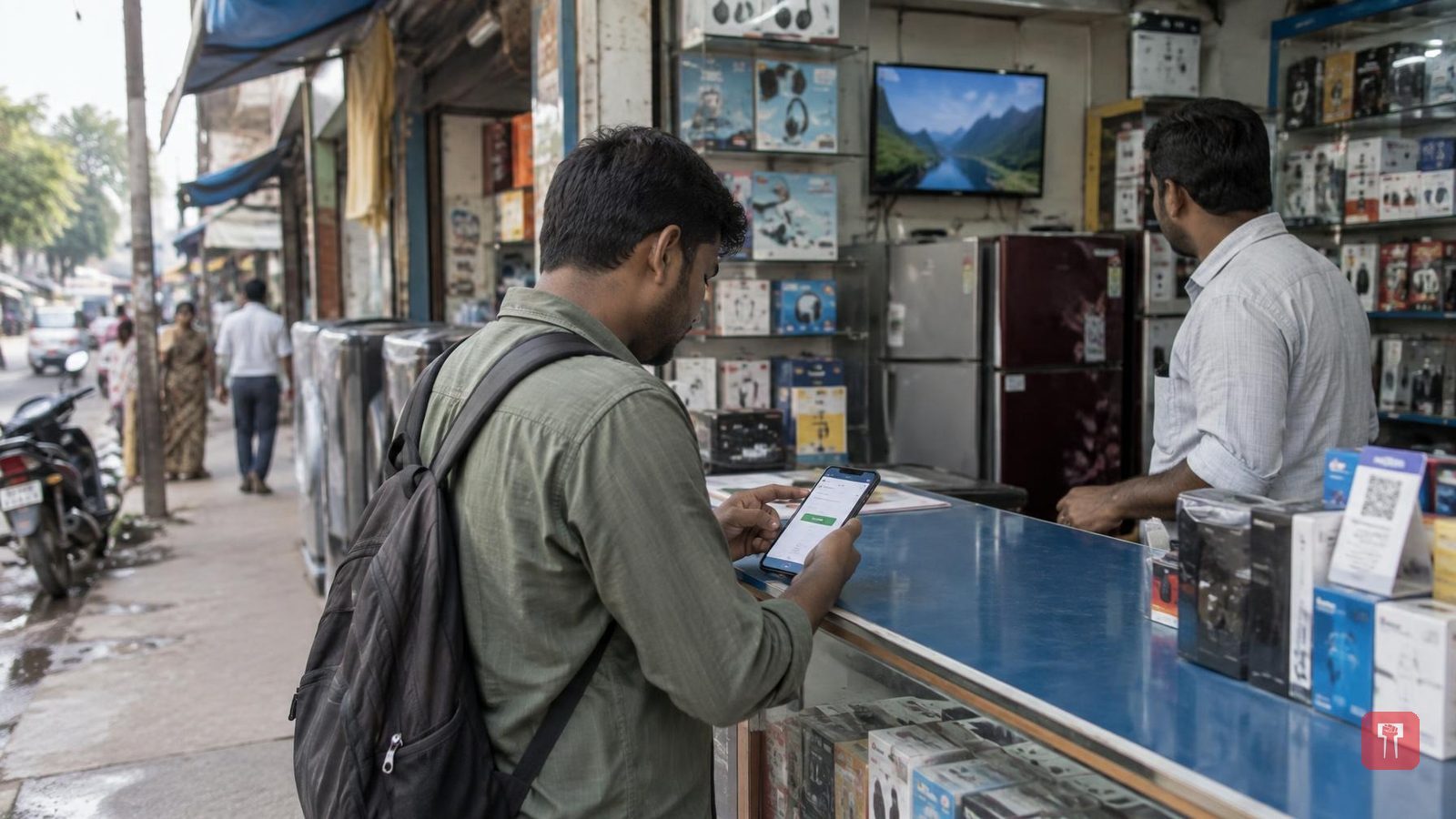
India is already ahead of the world in digital payments, and a similar shift is now visible in digital lending. Pahle India Foundation and Amazon Pay have jointly launched the country's first Digital Credit and Inclusion Index, DCII 2026. The report is based on conversations with more than 5,000 people across 100 cities in 20 states. It found that smaller cities, or Tier 2 cities, have moved ahead of bigger cities in taking digital loans.
According to the report, Tier 2 cities scored 58.64, while Tier 1 cities such as Mumbai and Delhi scored only 53.1. Tier 3 cities scored 55.7. Cities such as Coimbatore, Surat, Nagpur, Indore, Prayagraj, Ranchi and Ludhiana are now leading in digital credit. Notably, women in these smaller cities are not lagging either. The gap between men's and women's scores there is only 2.8 points, compared with a gap of 9.1 points in bigger cities, suggesting more equal access in smaller cities.
The country's overall DCII score is 55.85, placing India in the "emerging and served" category. The Access score is the highest at 61.24, meaning the facility has reached people. But the Impact score, which measures whether people are actually benefiting from it, is lower at 49.16.
Another notable finding is that salaried women scored higher than men. While men typically score higher elsewhere, salaried women scored 62.0 against 60.2 for men, suggesting that women with their own salary make better use of digital credit. The gap also appears to be narrowing by age: among 18 to 29 year olds, the gap between men and women is just 2.9 points, compared with 4.6 points among those above 60, indicating that the younger generation shows more equality on this front.
94.4 percent of people are aware of digital credit, so awareness is not the issue. The real problem is trust. Trust in digital payments stands at 69.7, but trust in digital lending is only 52.5. People still see online loans as risky. When money is needed, 48.2 percent of people use their savings, only 6.9 percent use loan apps and 3.4 percent use Buy Now Pay Later (BNPL). Digital loans are still not the first choice in a financial crunch.
The report also says homemakers, gig workers, daily wage workers and students score 11 points lower than salaried people, because they lack proper income proof, which keeps them from getting loans. On the reasons for borrowing, 59 percent of people take loans to buy items such as mobile phones, TVs and refrigerators, while the score for loans taken for business or property is only 43.2. However, among repeat borrowers, 64 percent put the money into business, suggesting people use it more sensibly once they get into the habit.
Pahle India chairman Rajiv Kumar said financial inclusion should not be measured only by how many people it reached, but also by how much real benefit it has delivered. Amazon Pay India CEO Vikas Bansal said 75 percent of their customers are from Tier 2 and Tier 3 cities, and the report will help them build better products for these customers. He said India will become a developed nation by 2047, and digital credit will play a big role in that.
