

Indian markets shut for holiday as Asian bourses tumble
Sensex and Nifty were closed for Ganesh Chaturthi as markets across Asia fell sharply amid Middle East tensions and rising crude prices
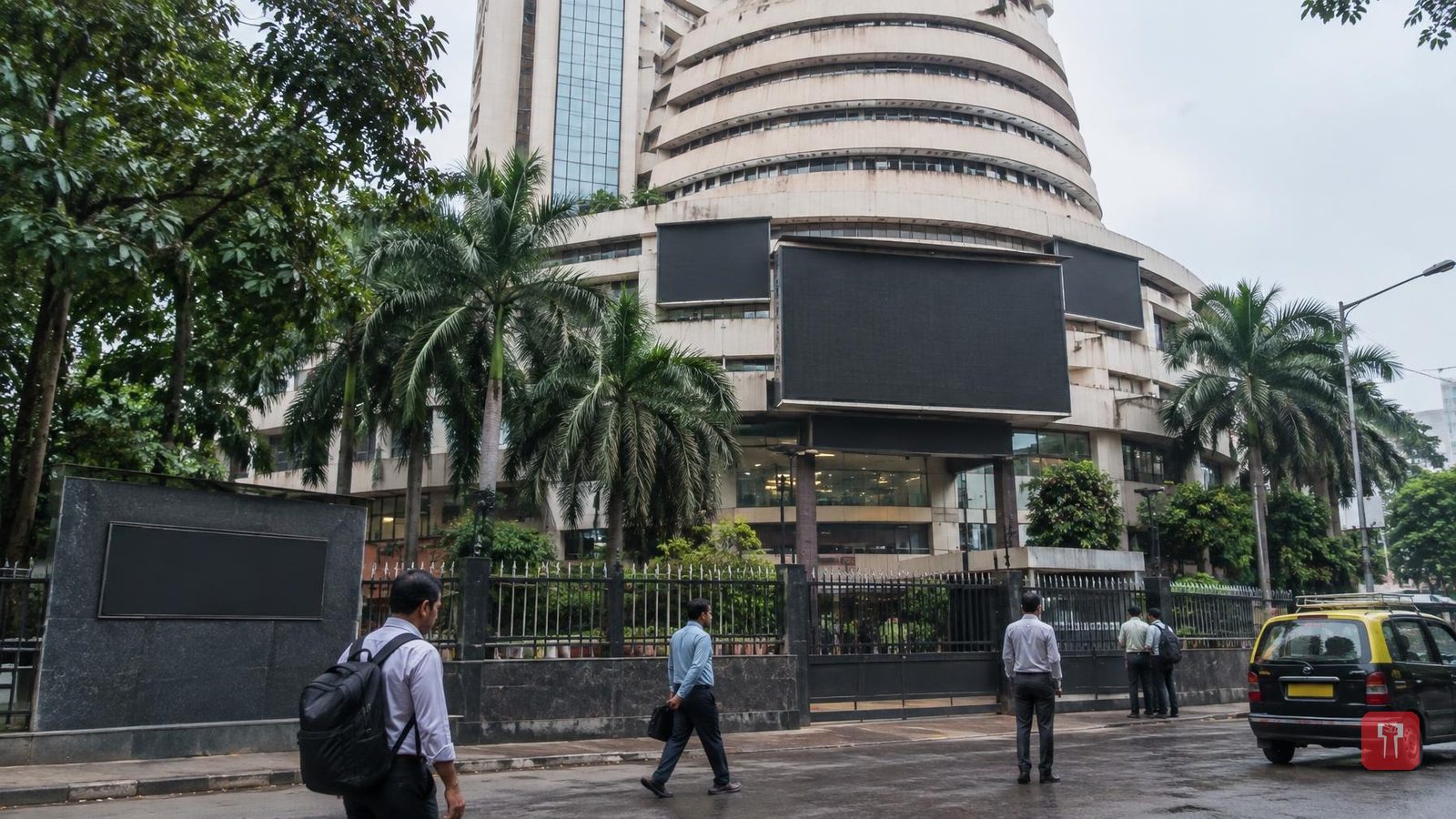
Stock markets saw continuous declines last week, and the Indian market being closed on Monday, the first day of this week, turned out to be good for investors. Had the turmoil in foreign markets affected the Indian market, both the Sensex and Nifty would have been hit negatively. The Nifty, considered a key gauge for the Indian market, had already been trading at a sluggish pace since the start of the week. Meanwhile, stock markets from Japan to South Korea and Pakistan were in turmoil, with their key indices falling sharply.
According to the BSE and NSE holiday lists, both exchanges are closed on September 14 for Ganesh Chaturthi. There will be no trading in the equity, equity derivatives and currency segments during this period. In the commodity market, trading is closed on the Multi Commodity Exchange (MCX) during the morning session, but it will resume as usual from 5 pm. This means only four trading days remain in the stock market this week.
Both key indices had recorded steep declines last week. The National Stock Exchange's Nifty 50 fell more than 2 percent over the week, while the Bombay Stock Exchange's 30-share Sensex was down 2.27 percent over five trading days.
Indian investors got some relief from the market being closed on Monday, as the first trading day of the week proved extremely bad for markets around the world, particularly for investors in most Asian markets. Japan's Nikkei saw a big fall, while Pakistan's stock market also declined. After a poor start, Japan's Nikkei index was trading at 63,492, a fall of more than 500 points. South Korea's Kospi fell more than 250 points to 6,684. Taiwan's stock market also saw a sharp fall of 322 points. In Pakistan, the Karachi 100 (KSE) index recorded a steep fall of around 188 points.
The turmoil in most foreign stock markets is being attributed to developments in the Middle East. Rising tension between the United States and Iran has weakened hopes of the Strait of Hormuz being fully reopened. Meanwhile, Houthi rebels appear to be seizing control of the Bab-el-Mandeb strait, and a Saudi Arabian oil pipeline has been shut down.
As a result, crude oil prices in the international market appear to be rising again. Brent crude oil prices have reached 108 dollars per barrel, WTI crude oil prices 104 dollars per barrel, and Murban crude oil prices around 120 dollars per barrel. This has raised the risk of inflation in many countries around the world that depend on oil imports, and has also soured the mood in stock markets.
