

BRICS summit in Delhi puts spotlight on India's balancing act, US media say
As Russia, China and Iran gather in New Delhi for the BRICS summit, US newspapers analyse what India's strategy means for Washington
 Images are not validated/verified
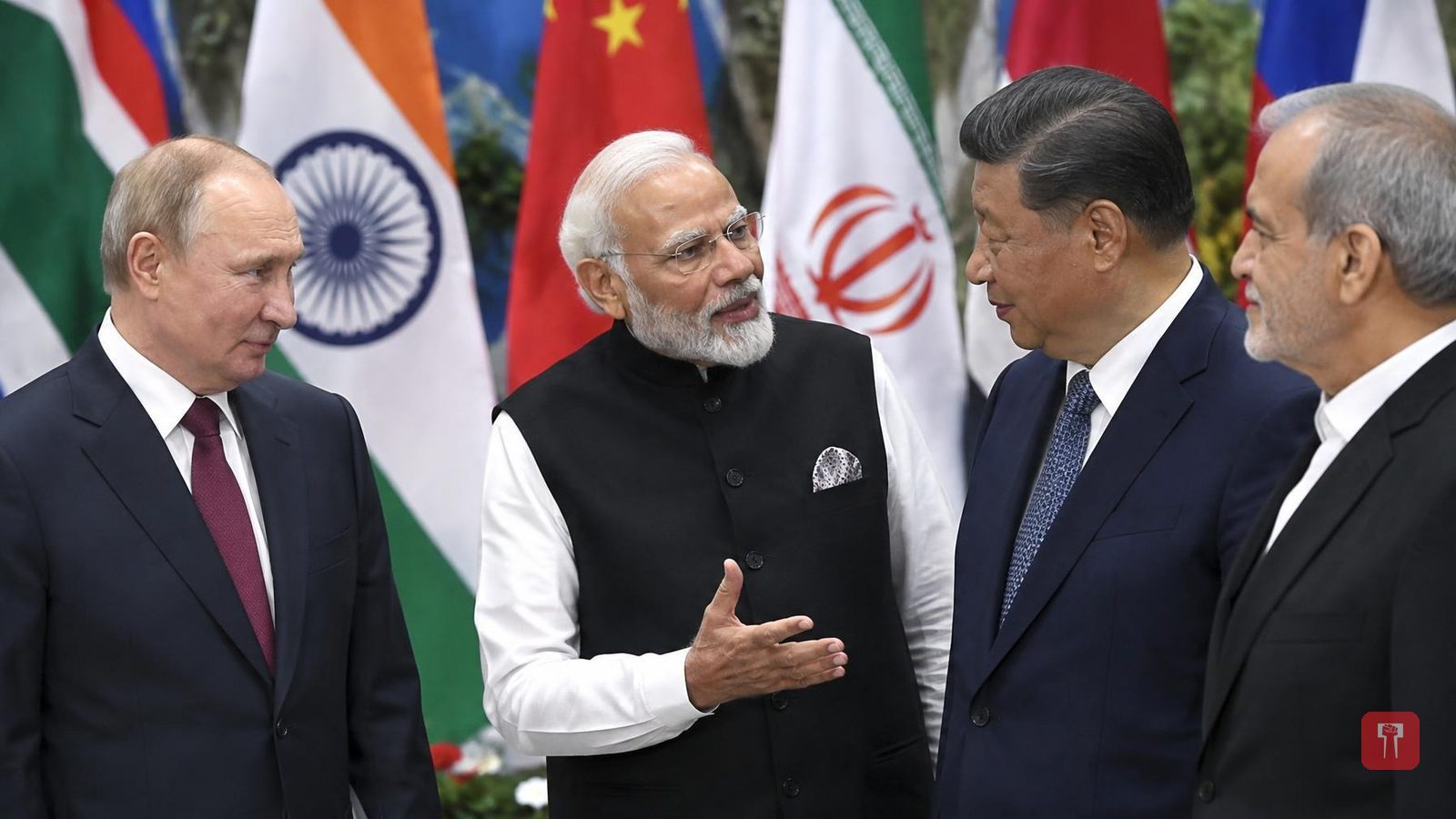
The 18th BRICS summit, hosted by India in New Delhi, has stirred global politics. As the global economy and geopolitics shift rapidly, countries such as Russia, China and Iran, seen as major adversaries of the United States, are coming together on Indian soil. Diplomatic circles from Washington to Beijing are closely watching every development at the summit and any agreements reached there. With President Donald Trump's second term facing a difficult foreign policy landscape, Russia and China appearing on the same platform as India has become a matter of concern for the United States.
Major American newspapers, including The New York Times, The Wall Street Journal and The Associated Press, have analysed the meeting in depth. They say this is not merely an annual meeting but a picture of a changing world that challenges Western dominance and shows the rising influence of Global South countries.
The biggest question is who will emerge as the strongest and most trusted face of the developing world, or Global South: Prime Minister Narendra Modi or Chinese President Xi Jinping. China's approach has always been to use BRICS against the economic and diplomatic power of the United States and Western countries, with Beijing wanting to turn BRICS into an anti-Western platform. India's strategy, by contrast, is entirely different and multipolar. India's clear intent is for BRICS to be an inclusive, open and non-Western grouping, not an anti-Western one. India does not want any country in the world to be forced to choose between the United States and China or Russia. Other developing countries, troubled by rising energy prices, the Russia-Ukraine and Middle East wars, US tariffs and issues around artificial intelligence, are also recalibrating their ties with Washington and Beijing.
According to Yun Sun, director of the China programme at Washington's Stimson Center, China's biggest concern regarding India is India's growing diplomatic and military coordination with the United States. India-China relations were badly strained after the 2020 Galwan Valley clash, and since 2024 the two countries have cautiously tried to repair ties. This is Xi Jinping's first visit to India in seven years. Another aspect is that Xi Jinping is set to meet President Trump at the White House on 24 September, making his meeting with Modi in New Delhi beforehand diplomatically significant for China.
According to The Wall Street Journal, both India and China have a golden opportunity to reduce mutual tensions by taking advantage of the uncertainty in US-China relations. India's continued purchase of cheap Russian crude oil during Trump's second term had caused some strain in India-US relations, and India is trying to use this to rebalance its foreign policy. However, experts believe improvement in India-China relations will remain limited, since the border dispute remains unresolved, China and Pakistan have close military ties, and there is ongoing rivalry over security in the Indian Ocean region, meaning India will not easily trust China.
According to The Washington Post and The Associated Press, hosting BRICS is a delicate balancing act for India. Russian President Vladimir Putin, Iranian President Masoud Pezeshkian and China's Xi Jinping are present at the summit. Ahead of it, Prime Minister Modi held separate bilateral talks with Putin and Pezeshkian. With new members joining, BRICS has now become a larger grouping of 11 countries, though all these countries have differing political, economic and foreign policy interests. According to Praveen Donthi, senior analyst at the International Crisis Group, "The Global South is not a like-minded group, so it will be difficult for BRICS to form a common view on the ongoing conflicts in Ukraine and the Middle East." India has old historical ties with Russia and Iran, yet its strategic partnership with Quad countries such as the United States, the European Union, Japan and Australia also remains strong. This is why India's balancing act continues to draw interest and praise worldwide.
