

Bail Pola: Farmers in Vidarbha, Marathwada worship bullocks in gratitude festival
On Bail Pola, farmers across Vidarbha and Marathwada gave their bullocks rest and worship, decking them out for a village procession.
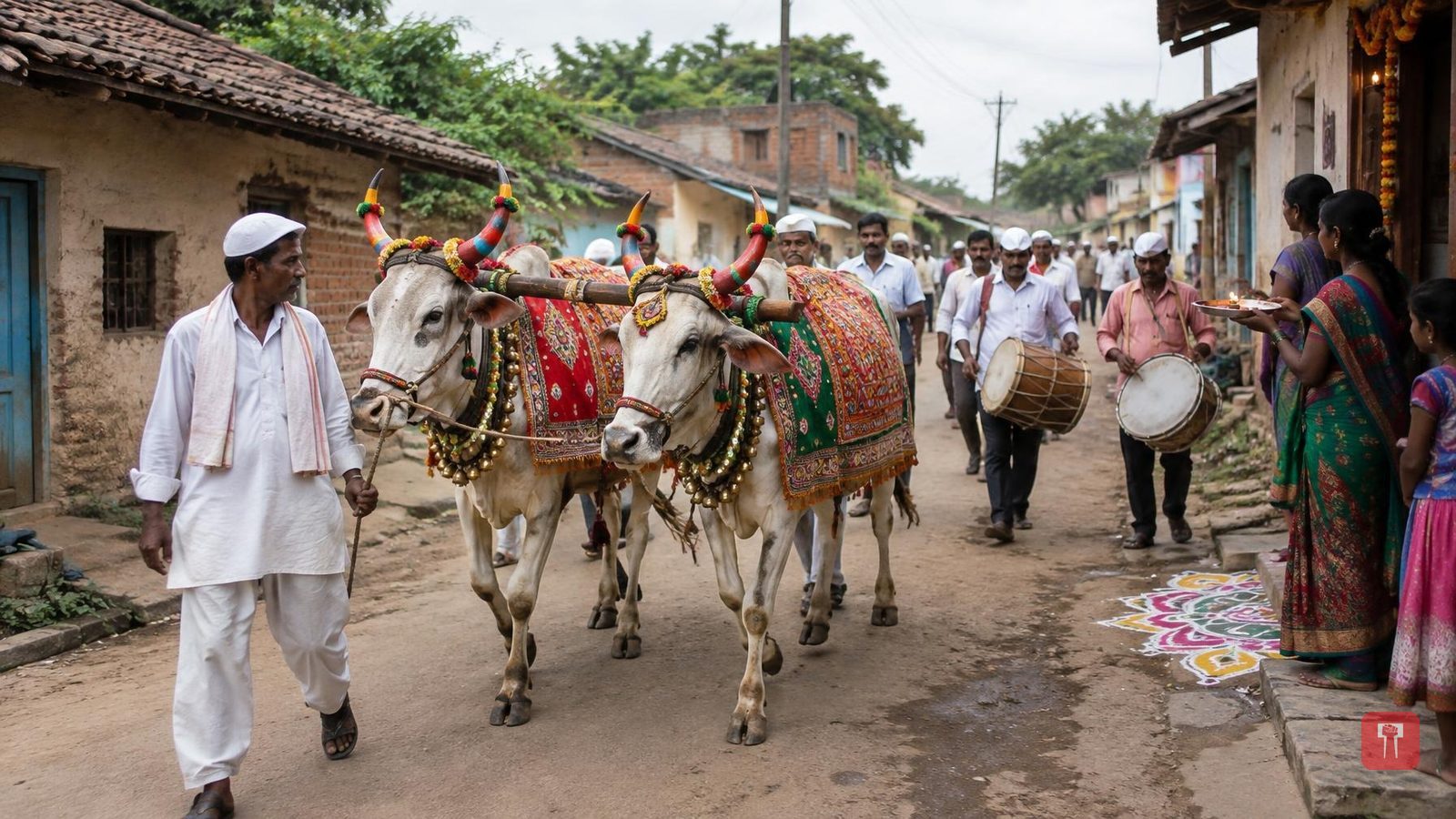
In the villages of Maharashtra and central India, farming festivals are not limited to worship alone but become a way of celebrating the bond between people, land and cattle. One such festival is Bail Pola, celebrated with great enthusiasm every year on Amavasya in the month of Shravan across Vidarbha and Marathwada.
For bullocks that toil in the fields all year, this is a day of rest and honour. On Pola, no work is taken from the bullocks; instead, they are worshipped like an elder member of the family.
The festival has an old story behind it. It is said that when Krishna was a child, Kansa sent a demon named Polasura disguised as a bull to kill him, but the young Krishna recognised and slew him. For this reason, the day is also seen as one for showing affection towards children, alongside the bullocks. Some also connect it to devotion to Nandi, the vehicle of Lord Shiva.
Historically, cattle have been regarded as a symbol of prosperity since Vedic times. Rituals linked to the worship of cattle grew further during the era of the Yadava kings, and under the Maratha empire of Chhatrapati Shivaji Maharaj, the festival became a major part of village life.
Preparations for Pola begin a day in advance. On this night, rituals such as "vesan tодi" -- loosening the rope through the bullocks' noses -- and "khandshekhani" -- massaging their shoulders with ghee or homemade butter -- are carried out.
On the day of the festival, farmers take the bullocks to a river or pond early in the morning and bathe them thoroughly. They are then adorned: colour is applied to their horns, new bells and cowrie-shell garlands are tied around their necks, and silk or embroidered cloth is draped over their backs. In the afternoon, a grand procession of decorated bullocks moves through the village to the beat of dhol-tasha and lezim. When the bullocks return home, women make rangoli at the door, perform aarti with a ghee lamp, apply turmeric and kumkum to the horns, and touch their feet to seek blessings.
A special feature of Pola is that the family feeds the bullocks before eating themselves. Every household prepares the famous sweet flatbread puran poli, made with chana dal and jaggery, on this day. Karanji, bajra bhakri, kadhi, vada-bhaat and spiced vegetables are also prepared.
The day after Pola, children in Nagpur district and Vidarbha celebrate "Tanha Pola". This tradition was started in 1789 by Nagpur's ruler Shrimant Raje Raghuji Maharaj Bhonsle (II), to build in children an attachment to cattle and an understanding of the importance of farming. Children decorate small wooden or clay bullocks and take out a procession, going door to door to receive gifts and sweets.
The festival is now also being marked by greater attention to the environment and the health of the bullocks. In Kanadwadi village of Sangli district, with the help of the organisation Animal Rahat, farmers have completely given up the old practice of scraping bullocks' horns and applying chemical paint on them, since it carried a risk of horn cancer and skin allergies in the animals. Farmers now decorate the bullocks with natural turmeric paste and colourful ribbons, which is entirely safe and environment-friendly.
