

Supreme Court questions EC criteria in Shiv Sena symbol case, quizzes Shinde side
The Supreme Court pressed the Election Commission on its criteria for awarding Shiv Sena's name and symbol to the Shinde faction, as the party symbol case continued.
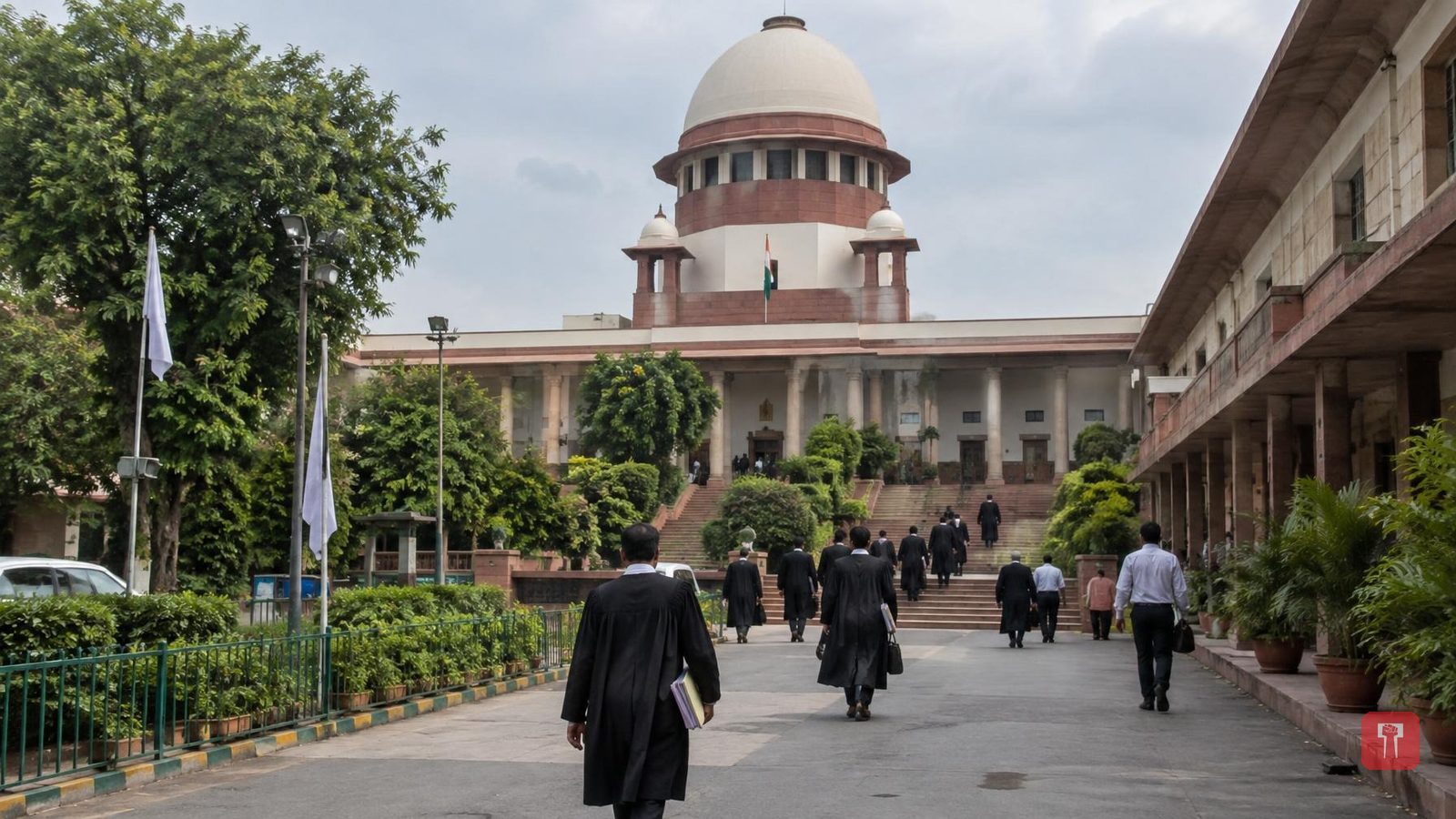
An important hearing is underway in the Supreme Court over the dispute concerning the Shiv Sena party name and its bow-and-arrow symbol. The Election Commission had earlier granted the Eknath Shinde faction the right to use the Shiv Sena name and the bow-and-arrow symbol. The Uddhav Thackeray faction has challenged that decision. The Thackeray faction has also challenged in the Supreme Court the ruling given by Maharashtra Assembly Speaker Rahul Narwekar on the disqualification of MLAs.
The hearing is before a bench of Chief Justice Surya Kant, Justice J. Bagchi and Justice Mohana. Kapil Sibal and Devadatt Kamat argued for the Uddhav Thackeray faction, while senior advocate Neeraj Kishan Kaul is now arguing for the Eknath Shinde faction.
During the hearing, the court raised a key question about the Election Commission's decision-making process, asking exactly what criteria the Commission applied while granting the Shiv Sena name and the bow-and-arrow symbol to the Shinde faction. In an earlier hearing too, the court had asked why the option of giving both factions neutral, that is new, symbols was not adopted. Justice J. Bagchi said it was necessary to examine, for the purpose of judicial review, whether all available options had been properly considered.
Arguing for the Shinde faction, Neeraj Kishan Kaul presented before the court vote figures from the 2019 election. He pointed to the gap between the votes received by the 40 MLAs supporting the Shinde faction and the votes received by the 15 MLAs of the Thackeray faction. Kaul also referred to the votes received by MPs supporting the Shinde faction in the Lok Sabha election.
Kaul also objected to the attempt to link the issue of MLA disqualification with the decision on the party symbol, saying the Election Commission's decision and the Assembly Speaker's decision are taken for different purposes. Citing the Constitution Bench ruling in the Subhash Desai case, Kaul argued that consistency between the decisions of the two constitutional bodies is not necessary. He noted that the Election Commission is an independent constitutional body responsible for overseeing and regulating the election process, and that it cannot keep its work pending indefinitely while waiting for the decision of another constitutional authority.
The next hearing in the case is likely to take place next Tuesday or Wednesday. Political circles are watching closely which issues the court raises and the direction the arguments from both sides take in the next hearing.
This story has published but the live thread has not started. Updates appear here the moment the desk files one.
