

Gold mine collapse in Sudan kills 67 workers
A section of the Al-Jara gold mine in Sudan's West Kordofan province caved in late Tuesday, killing at least 67 workers.
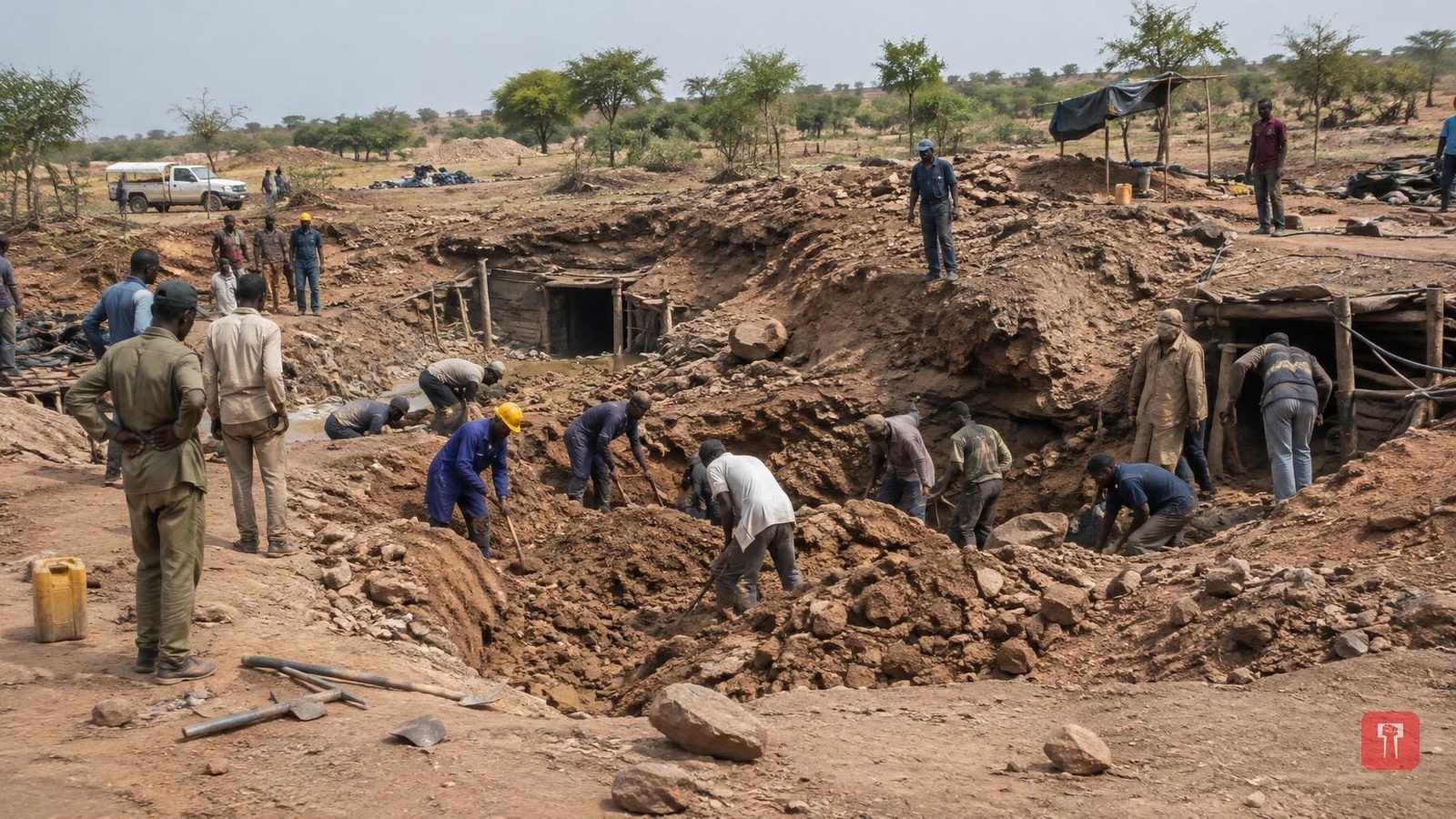
At least 67 workers have died after part of a gold mine collapsed in Sudan's West Kordofan province. The Al-Jara gold mine, located in a remote rural area, caved in late on Tuesday night. A large section of the mine gave way suddenly, sending hundreds of tonnes of soil and rock crashing down on labourers working inside. Several workers are still believed to be trapped under the debris, and local rescue efforts are underway at speed. Given the scale of the disaster, the death toll is feared to rise further.
According to information received, the Al-Jara gold mine is located near the town of Nuhud in West Kordofan province. On Tuesday night, workers were, as usual, extracting gold by traditional methods deep inside the mine. Without any warning, the upper section of the mine, which had been considered stable, collapsed. The fall of a large mound of earth left workers inside with no way out. According to eyewitnesses, the entire mine went dark in an instant and screams could be heard, but many workers suffocated to death before help could reach them.
As news of the disaster spread, local residents, medical staff and workers who survived the collapse immediately began rescue efforts. Medical teams said the bodies of 67 workers have so far been recovered from under the debris. However, because the mine is very deep and the amount of debris that fell is large, rescue teams are finding it difficult to reach further inside. Debris is being cleared with the help of basic tools, and it is feared that more people remain trapped inside.
The Al-Jara area where the disaster occurred is currently under the full control of the Rapid Support Forces (RSF), a paramilitary group in Sudan. A violent civil war has been under way for the past three years between Sudan's official army and the RSF. This administrative instability and political turmoil mean safety regulations are not followed in the country's rural areas. Modern mining equipment, technical inspections and safety measures are almost entirely absent in the region. As a result, poor local people risk their lives to earn a living by mining in this highly unsafe, traditional manner.
Thousands of families in rural Sudan depend on this traditional gold mining for their livelihood. With no safety measures, no helmets and no adequate oxygen supply, workers descend hundreds of feet into these mines. With no technical inspections carried out and frequent landslides, such mines are becoming death traps. The ongoing conflict and political crisis in Sudan have increased the frequency of such accidents. The Al-Jara mine disaster has once again raised questions about the lives and safety of Sudan's mine workers.
