

Shaktipeeth highway: new compensation rules issued for farmers, protests continue
Maharashtra has issued new land acquisition rules for the Shaktipeeth highway, but farmers in some districts are still protesting the project.
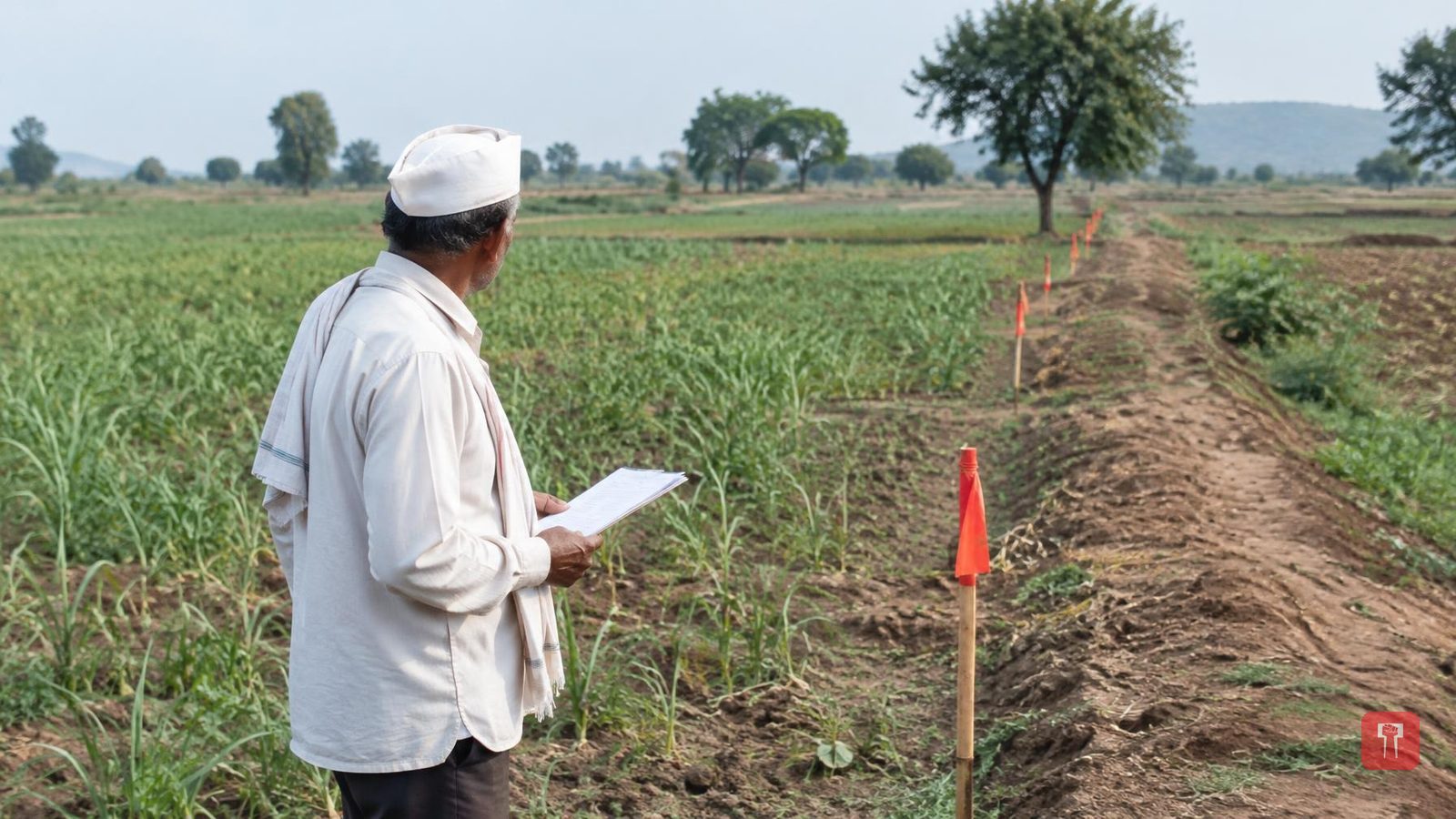
The Maharashtra government has officially issued new guidelines for land acquisition for the Shaktipeeth Mahamarg, which will run from Pavnar to Patradevi, connecting Nagpur to Goa. People in several villages have opposed the new rules, and there is considerable anger over the project in some stretches. This is why the government has now clearly laid out the compensation criteria and rules for those giving up their land. The compensation will be given according to the provisions of the Right to Fair Compensation and Transparency in Land Acquisition, Rehabilitation and Resettlement Act, 2013, and the Maharashtra Highways Act, 1955. The Shaktipeeth Mahamarg between Nagpur and Goa is said to be 856 kilometres long. The project is facing opposition in districts such as Solapur and Sangli, and compensation criteria have been fixed for farmers whose land will be taken for the highway.
The state government has issued new land acquisition guidelines for the project. Under these, affected farmers will get compensation according to the Land Acquisition Rehabilitation Act, 2013, and Maharashtra Act 155. Based on the market value of the land, that is, the ready reckoner rate, farmers will get compensation up to four times the rate in rural areas and double in urban areas. A provision has also been made for double compensation in urban or semi-urban areas. Under the rules of the land acquisition process, a provision for an additional 12 percent amount to landowners may also apply.
It is not necessary that every farmer will get the same, straightforward fourfold compensation. The final amount will depend on the type of land the farmer owns and the market rate and multiplier applicable to that land. Around 35 government resolutions (GRs) will be used for this entire land acquisition and compensation process. This includes important steps such as joint measurement, valuation of land, unproductive land (potkharab), the additional 12 percent amount, non-agricultural land, and valuation of trees and crops.
If a farmer disagrees with the compensation amount fixed under the Highways Act, the government has given them the legal right to appeal to an arbitrator. Along with this, the rules also provide that once the land is acquired, the highway authority may enter that land to carry out construction work.
