

Gauri Pujan: how the rituals differ across Maharashtra's communities
Every community and region in Maharashtra worships Gauri in its own way, with distinct forms, rituals and offerings.
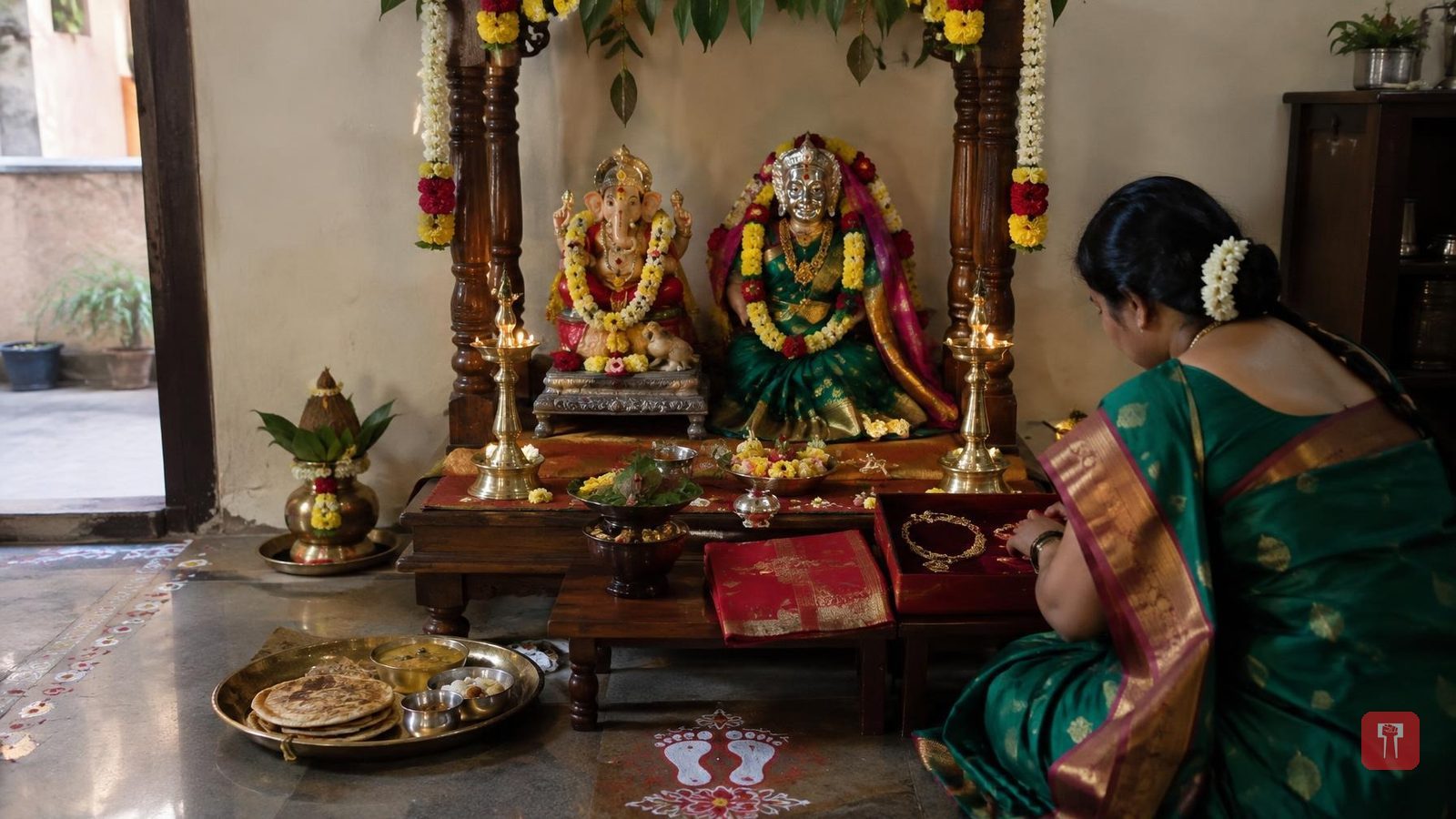
In Maharashtra, the tradition of worshipping Gauri after the arrival of Ganpati has continued for generations, and the same tradition is also seen in Karnataka. What stands out is that in every community and every region, Gauri's form, the manner of worship and the offerings made to her all differ.
In Konkanastha and Karhade Brahmin families, Khadyanchya Gauri is worshipped. Five or seven smooth stones brought from a riverbank are worshipped as Gauri. A daughter-in-law or unmarried daughter of the house brings Gauri home. Her aarti is performed at the threshold, and she is brought inside walking over rangoli footprints. Gauri is taken around every room of the house and shown its prosperity, including the kitchen, foodgrain, jewellery and the bookshelf. When asked, "What is here?", the reply given is "There is abundance." On the following day, kheer is offered; on the second day, ghavan-ghatle or puran-varan; and on the day of departure, karanji is offered.
In Vidarbha, Gauri is called Mahalakshmi. In Deshastha Brahmin households she is worshipped as Ubhya Gauri, while in Vidarbha she is referred to as Mahalakshmi. Masks made of brass, silver or another metal are placed on a heap of foodgrain, and daughters-in-law and daughters of the house bring them home. Here, two Mahalakshmis named Jyeshtha and Kanishtha are installed, and they are adorned with a sari, jewellery and other ornamentation. On the day of the main worship, sixteen kinds of leaves, flowers, various vegetables, chutney, salad, puranpoli and five traditional sweets are offered. Aambil is also a special part of this offering in Vidarbha. At the time of farewell, the prayer "mam grihe sthira bhava", meaning "stay steady in my home", is recited.
In the Kolhapur region there is a tradition of Tambyavarchya Gauri. In the Saraswat community of Konkan, Gauri is regarded as Ganpati's mother, and she arrives along with Mahadev even before Ganeshotsav begins.
In the Chandraseniya Kayastha Prabhu, or CKP, community, Gauri is worshipped in the form of Terda plants and stones. Only a daughter-in-law or daughter of the house brings Gauri home. The daughter-in-law or daughter carries the Terda and seven stones in a winnowing basket; milk and water are poured over her feet, her aarti is performed, and she is then brought into the house. She must step into a plate of water mixed with kumkum before entering. She then walks through the house leaving red footprints over the rangoli drawn throughout. The senior woman of the household performs her aarti in every room, places sugar on her palm and asks, "Gauri, Gauri, where have you come?", to which Gauri replies. After the entire house has been shown to her in this way, Gauri is seated beside Ganpati. She is then adorned with a mask and dressed in a sari. Her lap is filled with coconut and areca nut along with items of suhaag. On the first day, kheer, vegetables and roti are offered; on the second day, puranpoli is offered. On the third day, kheer and murad ghatlela kanhola are offered.
In the Bahujan community's tradition, in the farming community of Konkan, an image is made from Terda leaves and topped with a mask of clay. In the Bahujan community, Gauri is worshipped by arranging a stack of clay pots. In the Konkanastha Maratha community, it is customary to take a turmeric pillar and Gauri's mask to a well, worship them there, and bring them home with music and celebration.
These varied traditions of Gauri Pujan reflect Maharashtra's cultural diversity. Though the worship, offerings, forms and rituals differ, the sentiment behind welcoming Gauri remains the same: bidding farewell, with love, respect and warmth, to this mother goddess who has come to her maternal home. This is why Gauri is regarded not merely as a deity of worship but as an auspicious symbol of the daughter, mother and prosperity of every home.
