

BRICS summit: Bangladesh got an invite, but not the one it wanted
Bangladesh PM Tariq Rahman will skip the BRICS summit after Dhaka said India's invite came only in his capacity as BIMSTEC chair, not as a bilateral invitation.
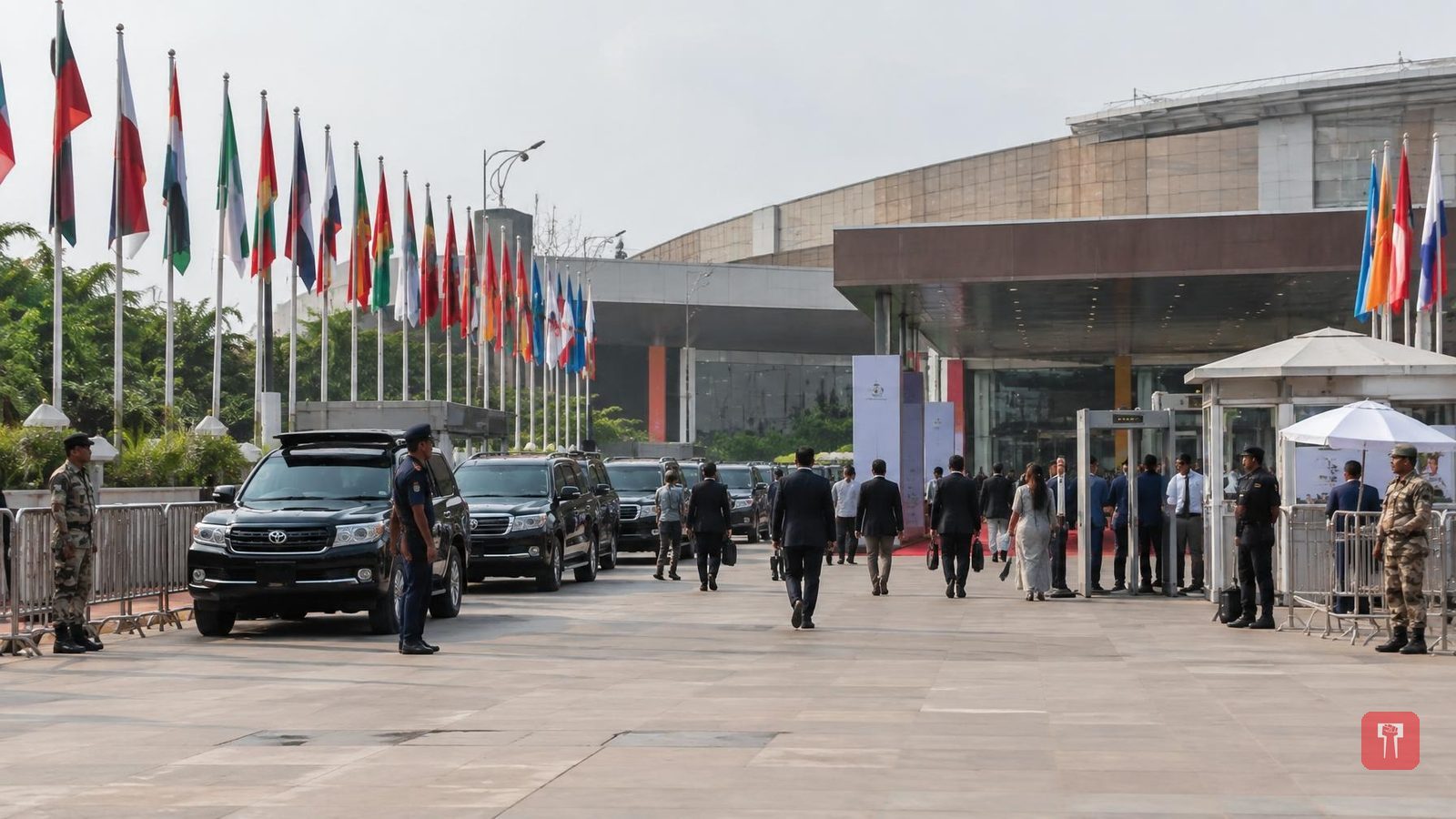
The 18th BRICS summit is being held in New Delhi on September 12 and 13, hosted by India. The gathering includes Russian President Vladimir Putin, Chinese President Xi Jinping and leaders of several other major countries. But the summit has triggered a diplomatic row with neighbouring Bangladesh over an invitation. Bangladesh's new Prime Minister Tariq Rahman has made clear he will not attend, reviving debate over relations between the two countries.
Bangladesh's State Minister for Foreign Affairs Humayun Kabir, speaking to reporters in Dhaka, clarified the matter. According to him, the invitation from India was not sent to Bangladesh's Prime Minister on a personal or bilateral basis. Bangladesh currently holds the chairmanship of BIMSTEC, the Bay of Bengal Initiative for Multi-Sectoral Technical and Economic Cooperation, and India's invitation was sent solely in that capacity. This is why the question of Tariq Rahman attending the meeting as Bangladesh's Prime Minister does not arise, Kabir said in unequivocal terms.
India's Ministry of External Affairs, setting out its official position on the row, said Bangladesh is not a full member of BRICS. Under BRICS convention, countries or organisations that are not members but are regionally significant are invited only for "outreach" sessions. India said it followed this convention in inviting Bangladesh's leader, as the current chair of BIMSTEC, for an outreach session. Indian officials said there was no intention to cause any offence.
In international diplomacy, the form of address on an invitation carries significant weight. A letter addressed "Honourable Prime Minister, please attend" is treated as direct bilateral recognition between two countries. But one addressed "BIMSTEC Chair, please attend" limits the scope of the invitation to that of a regional representative. Even though it is the same person, the two forms of address carry very different diplomatic signals. Bangladesh's foreign ministry, highlighting this distinction, decided it was better to stay away from the summit.
Following the political upheaval in Bangladesh in August 2024, then-Prime Minister Sheikh Hasina resigned and took shelter in India. Relations between New Delhi and Dhaka have remained tense since. A new government has since been formed in Bangladesh under Tariq Rahman, and Dhaka is recasting its foreign policy. Against this backdrop, the world is watching closely what image emerges at a major global platform like BRICS, who holds bilateral talks with whom, and what status is accorded to whom.
India has not sidelined Bangladesh entirely. The invitation extended as BIMSTEC chair shows that India has not closed the door on regional cooperation. But on the question of who is accorded special political status at the BRICS platform and who is invited under the rules, India has held a firm position. BRICS currently has 11 member countries, and Bangladesh is not among them. How bilateral relations between the two countries develop from here will be worth watching.
