

Up to five. They lead your front page; everything else stays city wide.
You will get a Prime Alert when something breaks in these areas.
The city, and the morning. Back editions are the paper as it stood that day.
Loading the last ten editions…
Nagpur: Taking a leaf out of the Indian Army’s book of surprise inspections, the Nagpur Traffic Police have introduced a daily monitoring system to ensure that personnel deployed at key traffic points are actually present and performing their duties. The initiative, launched under DCP (Traffic) Aditya Mirkhelkar, is aimed at improving police visibility on city…
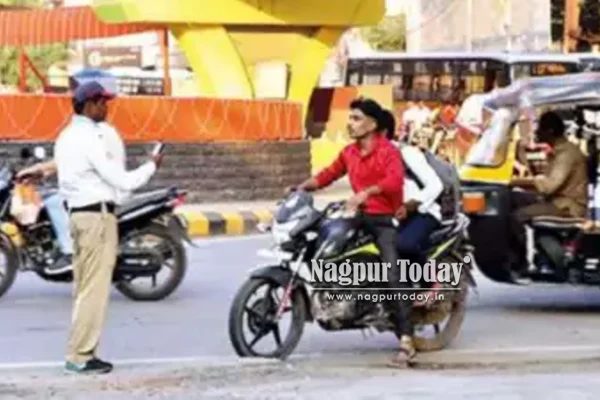
Nagpur : Taking a leaf out of the Indian Army’s book of surprise inspections, the Nagpur Traffic Police have introduced a daily monitoring system to ensure that personnel deployed at key traffic points are actually present and performing their duties.
The initiative, launched under DCP (Traffic) Aditya Mirkhelkar, is aimed at improving police visibility on city roads and ensuring that traffic personnel remain at their designated locations throughout their duty hours.
The Traffic Department has a strength of around 625 police personnel and officers, besides nearly 500 home guards, who are deployed at 171 major intersections across Nagpur for traffic regulation and enforcement.
Under the new system, an officer of Assistant Police Inspector (API) rank is assigned the task of conducting surprise inspections at selected traffic points. The officer checks 20 locations each during the morning, afternoon and night shifts, covering 60 locations in a single day.
The inspection schedule is kept confidential. The API is handed a list of 60 locations from the office of the DCP (Traffic) and is required to visit the spots without prior intimation to the personnel deployed there. The officer subsequently submits a report detailing the deployment and functioning of traffic personnel.
If a traffic policeman is found absent from the assigned location without authorisation, the department issues a notice seeking an explanation.
Mirkhelkar said the purpose of the exercise was not merely to check attendance but to ensure that traffic police remain visible on the roads, which, in turn, could improve compliance with traffic regulations.
“I wanted traffic police to be present on roads, which leads to better compliance with rules. So, I decided to carry out surprise checks, as is done in the Indian Army,” he said.
According to the DCP, the API conducting the inspection does not know the locations in advance. The officer receives the list and has to visit the assigned spots throughout the day before submitting a report.
The system has reportedly already resulted in improved deployment at several locations, particularly during night hours, when the presence of traffic personnel has often been a concern.
Traffic officials believe that regular police presence itself can act as a deterrent against traffic violations. Personnel stationed at busy junctions can intervene quickly when motorists violate rules and can also help regulate traffic during peak hours.
The initiative comes at a time when Nagpur continues to grapple with congestion and persistent violations at several important stretches.
While deployment is being monitored, traffic experts point out that enforcement also needs to focus on specific problem areas, particularly wrong-side driving and roadside parking.
Illegal parking and the practice of autorickshaw drivers stopping or waiting on busy roads continue to contribute to congestion at several locations, including Wardha Road, Kingsway Road, areas around the railway station, Cotton Market Road, Itwari and Mahal.
Experts said regular deployment of traffic personnel at such locations, coupled with strict action against violations, could have a greater impact on traffic management.
The Traffic Police are expected to continue the surprise inspections on a daily basis. Officials said the exercise would help improve discipline among personnel, identify gaps in deployment and ensure that enforcement remains consistent across the city.
The larger objective is to ensure that traffic police are not merely assigned to intersections on paper but are visibly present where motorists and pedestrians need them most.
Source: Nagpur Today

Asked once. After this the app never asks you for a city again.
Bengaluru was guessed from your connection. Nothing was set anywhere.
No account. No email. Nothing is shared. Pick your areas later, from You.

The Bengaluru edition, on your home screen.
Two taps in Safari. No App Store, no account.
You are following this story.